

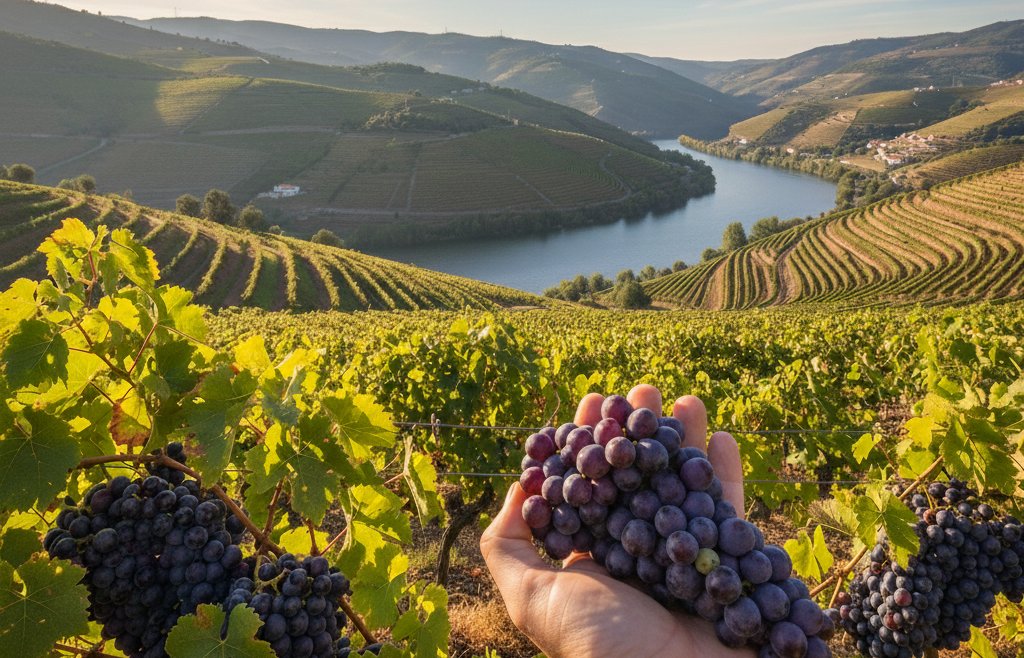
Portugal may be relatively small compared with some of Europe’s major wine-producing countries, but its vineyards offer an extraordinary range of styles. From cool Atlantic vineyards in the north to hot, dry landscapes farther south, the country contains a remarkable mix of climates, soils, elevations, grape varieties, and winemaking traditions. For wine lovers, this makes Portugal much more than a destination for one or two famous styles—it is a country worth exploring region by region.
One of the best ways to understand this diversity is to explore the country’s Portuguese wine regions. Each has developed its own identity, often shaped by geography and centuries of local winemaking. Even when the same grape variety appears in different regions, the resulting wines can taste surprisingly different.
Contents
- 1 Douro: Dramatic Landscapes and Powerful Wines
- 2 Dão: Elegance from High-Altitude Vineyards
- 3 Vinho Verde: Freshness in the North
- 4 Alentejo: Warmth, Sunshine, and Richer Styles
- 5 Bairrada: Atlantic Influence and Food-Friendly Wines
- 6 Madeira and the Azores: Wine at the Edge of the Atlantic
- 7 Why Native Grapes Make Portugal So Interesting
- 8 Exploring Portugal Through Wine
Douro: Dramatic Landscapes and Powerful Wines
The Douro Valley is perhaps Portugal’s most recognizable wine landscape. Steep vineyard terraces follow the winding Douro River, creating a spectacular setting that also presents challenging conditions for growers. The region has a dry continental climate, with hot summers and relatively low rainfall.
Schist-based soils dominate many of the vineyards, and the steep slopes mean that altitude and vineyard orientation can have a significant influence on how grapes ripen. The Douro is internationally associated with Port, but its importance extends well beyond fortified wine. Dry red wines have become increasingly respected, often combining concentrated fruit with firm structure and mineral character.
Touriga Nacional is particularly important here. This deeply colored, aromatic grape can contribute blackberry, violet, spice, and firm tannins to Douro reds. However, its expression is not identical everywhere in Portugal.
Dão: Elegance from High-Altitude Vineyards
Travel south from the Douro and the Dão provides an interesting contrast. Vineyards are often situated at higher elevations, surrounded by mountains that help moderate the climate. Summers can be warm, but the region generally experiences cooler nights than many lower-lying wine areas.
The combination of granite soils, altitude, and temperature variation can produce wines with freshness and structure. Red wines from Dão are frequently elegant rather than simply powerful, with bright acidity and refined tannins.
This is another setting where Touriga Nacional demonstrates why Portugal’s native varieties deserve closer attention. In the Dão, the grape can show floral aromas, dark fruit, freshness, and a more restrained structure than expressions from warmer Douro sites. Comparing Touriga Nacional from the two regions is a useful introduction to the concept of terroir: the grape matters, but so do the place, climate, soil, and decisions made by the grower.
Vinho Verde: Freshness in the North
In the northwest, Vinho Verde offers an entirely different experience. The region has a strong Atlantic influence, with relatively high rainfall and a cooler, greener landscape. Its wines are generally associated with freshness, lively acidity, and relatively low alcohol.
Although the name Vinho Verde is often interpreted as referring to “green wine,” it is actually the name of the wine region. White wines are particularly popular and may be made from varieties such as Alvarinho, Loureiro, Arinto, and Trajadura.
Alvarinho, especially associated with the subregion of Monção e Melgaço, can produce fuller and more aromatic wines than the lighter styles commonly associated with Vinho Verde. Citrus, stone fruit, floral notes, and mineral qualities can make these wines excellent companions for seafood.
Alentejo: Warmth, Sunshine, and Richer Styles
Portugal’s Alentejo region offers another major contrast. The landscape is generally warmer and drier, with broad plains and rolling hills. The climate encourages generous grape ripening, making the region well known for approachable, fruit-forward red wines as well as increasingly interesting white wines.
Local varieties such as Aragonez, Trincadeira, Alicante Bouschet, Antão Vaz, and Roupeiro contribute to the region’s distinctive character. Some vineyards also benefit from differences in elevation and exposure, which can help preserve freshness despite the hot conditions.
For travelers interested in wine and food, Alentejo is particularly rewarding. The region has a strong culinary identity, with dishes based on ingredients such as pork, lamb, bread, olive oil, herbs, and local cheeses. Its wines naturally fit this hearty cuisine.
Bairrada: Atlantic Influence and Food-Friendly Wines
Near Portugal’s central Atlantic coast, Bairrada is known for a maritime climate and its distinctive red wines. The region is strongly associated with Baga, a grape capable of producing wines with high acidity, firm tannins, and considerable aging potential.
Baga can be challenging when young, but careful winemaking can reveal complex flavors of red and dark fruit, herbs, spice, and earth. Bairrada also produces sparkling wines, which are particularly well suited to the region’s seafood and traditional cuisine.
The region illustrates an important point about Portuguese wine: native varieties are not necessarily designed to be immediately familiar. Some reward patience and exploration, especially when compared with more internationally standardized wine styles.
Madeira and the Azores: Wine at the Edge of the Atlantic
Portugal’s wine diversity becomes even more fascinating when its islands are considered. Madeira produces fortified wines that can age for extraordinary periods, with styles ranging from dry and nutty to rich and sweet. The island’s volcanic terrain and distinctive climate contribute to its unique identity.
The Azores provide another unusual wine environment. Vineyards grow on volcanic soils in the middle of the Atlantic, where growers have historically had to protect vines from strong winds and challenging maritime conditions. Wines from varieties such as Arinto dos Açores, Verdelho, and Terrantez do Pico can offer pronounced acidity and mineral qualities.
These island wines demonstrate how geography can influence viticulture in dramatic ways. They are a reminder that Portugal’s wine story extends far beyond the mainland.
Why Native Grapes Make Portugal So Interesting
One of Portugal’s greatest strengths for adventurous wine drinkers is the sheer number of indigenous grape varieties. Instead of relying primarily on a small group of globally familiar grapes, Portuguese producers work with varieties that have evolved alongside local landscapes and traditions.
Touriga Nacional is a useful example because it shows that a grape variety does not have a single, fixed personality. In the Douro, it can contribute concentration, dark fruit, floral aromas, and structure to powerful wines. In the cooler, higher-altitude Dão, it can display greater freshness and elegance.
The same principle applies to many other Portuguese grapes. Alvarinho, Baga, Encruzado, Castelão, Trincadeira, and Antão Vaz can all provide very different experiences depending on where they are cultivated and how they are made into wine.
Exploring Portugal Through Wine
For wine lovers planning a trip to Portugal, exploring different regions can be almost like visiting several wine countries within one. A journey through the Douro reveals dramatic terraces and structured reds; the Dão highlights altitude and elegance; Vinho Verde showcases Atlantic freshness; Alentejo offers warmth and generosity; Bairrada introduces firm, age-worthy Baga; and Madeira and the Azores reveal the extraordinary influence of island geography.
The most rewarding approach is to look beyond Portugal’s internationally famous bottles and seek out lesser-known producers, local grape varieties, and regional specialties. Tasting wines side by side can reveal how dramatically climate, soil, altitude, tradition, and human choices influence what ultimately reaches the glass.
For travelers, this makes Portuguese wine more than something to drink alongside a meal. It becomes a way to understand Portugal itself—its landscapes, history, agriculture, cuisine, and regional cultures. The deeper you explore, the clearer it becomes that Portugal’s wine identity is defined not by a single style, but by an impressive diversity of places and native grapes.
