

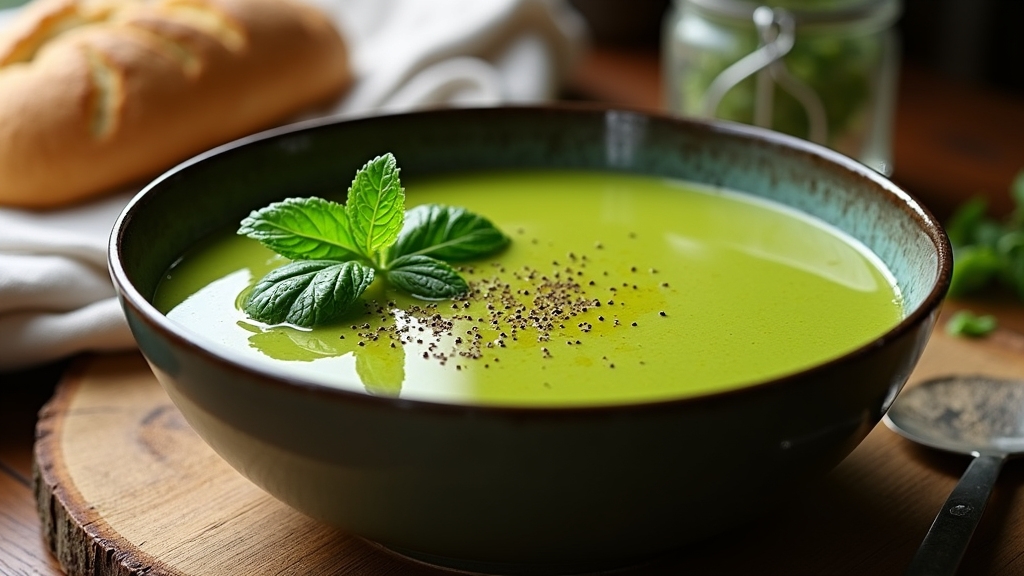
When I make pea soup, I love how comforting and hearty it is. I start by simmering fresh or frozen peas with chopped veggies and rich vegetable broth. Once it’s cooked, I blend it until smooth and season to taste. Adding fresh herbs like mint or chives gives it a burst of flavor. It’s nutritious, delicious, and perfect with some crusty bread. I can’t wait to share more tips and tricks for your own pea soup adventure!
Contents
History
When you think about pea soup, it’s hard not to feel a sense of warmth and comfort, especially when you consider its long and rich history. This dish traces its historical origins back to ancient civilizations, where peas were cultivated as a staple food. Across cultures, pea soup has held significant cultural importance, often symbolizing nourishment during lean times. It’s fascinating how each culture adds its unique twist, making it a canvas for creativity. From hearty versions in Europe to lighter takes in the Mediterranean, pea soup reflects the diverse ways we connect through food. So, as we explore this culinary wonder, let’s celebrate its past while embracing the innovations that keep it deliciously relevant today.
Recipe
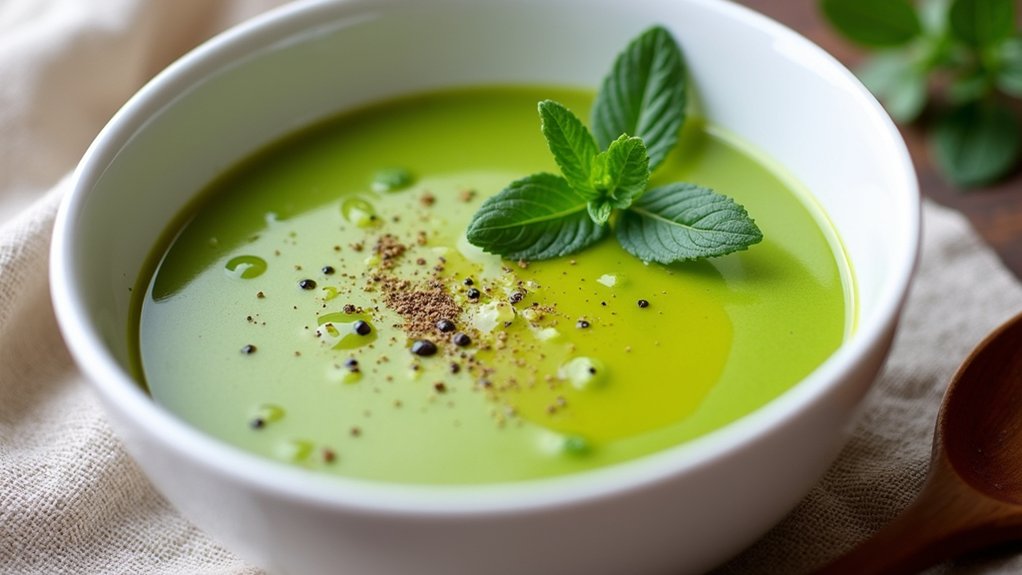
Pea soup is a comforting and hearty dish that is perfect for chilly days or when you’re in need of a nutritious meal. This simple yet flavorful recipe highlights the natural sweetness of peas combined with aromatic vegetables and herbs, creating a delightful blend of tastes. Whether you’re using fresh, frozen, or dried peas, this soup is versatile and can be easily adapted to suit your preferences.
Pea soup is a warm, nourishing dish that beautifully blends the sweetness of peas with vibrant vegetables and herbs. Perfect for any day!
The beauty of pea soup lies in its ability to be both satisfying and healthy. Packed with protein and vitamins, it’s an excellent choice for a light lunch or dinner. Pair it with crusty bread or a fresh salad for a complete meal that will warm your heart and fill your belly.
Ingredients:
- 2 cups green peas (fresh or frozen)
- 1 medium onion, chopped
- 2 cloves garlic, minced
- 2 carrots, diced
- 1 celery stalk, diced
- 4 cups vegetable or chicken broth
- 1 teaspoon dried thyme
- Salt and pepper to taste
- 2 tablespoons olive oil
- Optional: croutons or fresh herbs for garnish
In a large pot, heat the olive oil over medium heat and sauté the chopped onion, garlic, carrots, and celery until they are soft, about 5-7 minutes. Add the peas, broth, thyme, salt, and pepper to the pot. Bring the mixture to a boil, then reduce the heat and let it simmer for about 20-30 minutes until all the vegetables are tender. Use an immersion blender to puree the soup to your desired consistency, or transfer it to a blender in batches. Return the soup to the pot, adjust the seasoning if necessary, and heat through before serving.
When making pea soup, consider using homemade broth for an extra layer of flavor. Additionally, feel free to experiment with herbs and spices to customize the soup to your taste—adding a splash of lemon juice or a pinch of smoked paprika can elevate the dish even further. For a creamier texture, you can stir in a bit of heavy cream or coconut milk just before serving. Enjoy your delicious pea soup!
Cooking Steps
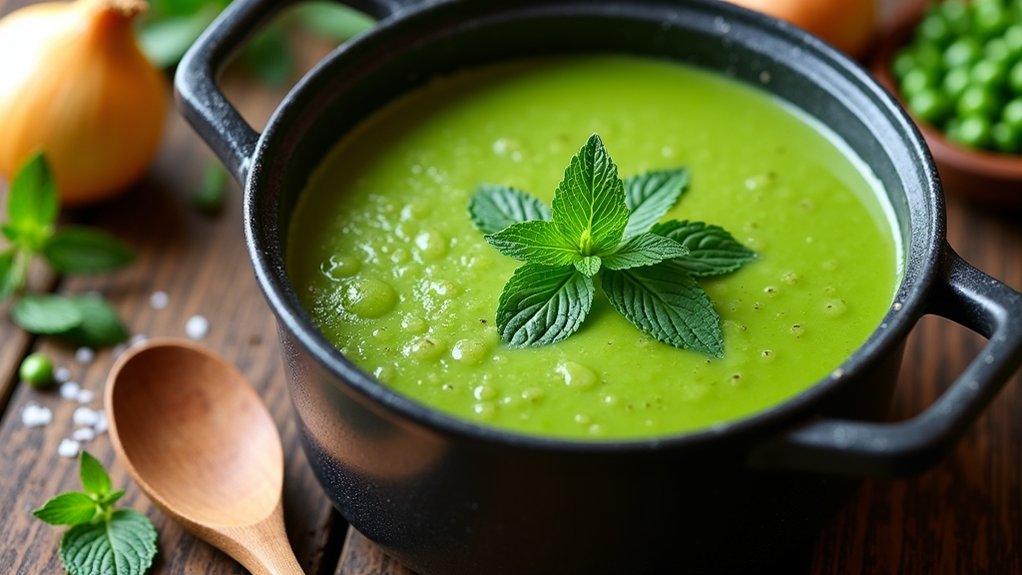
Now that we’ve gathered our ingredients, let’s jump into the cooking steps that’ll bring our pea soup to life. First, I’ll show you how to prepare fresh peas, which is the key to a vibrant flavor. After that, we’ll simmer them with vegetable broth and blend everything until it’s perfectly smooth, making it easy to add your favorite seasonings.
Step 1. Prepare Fresh Peas First
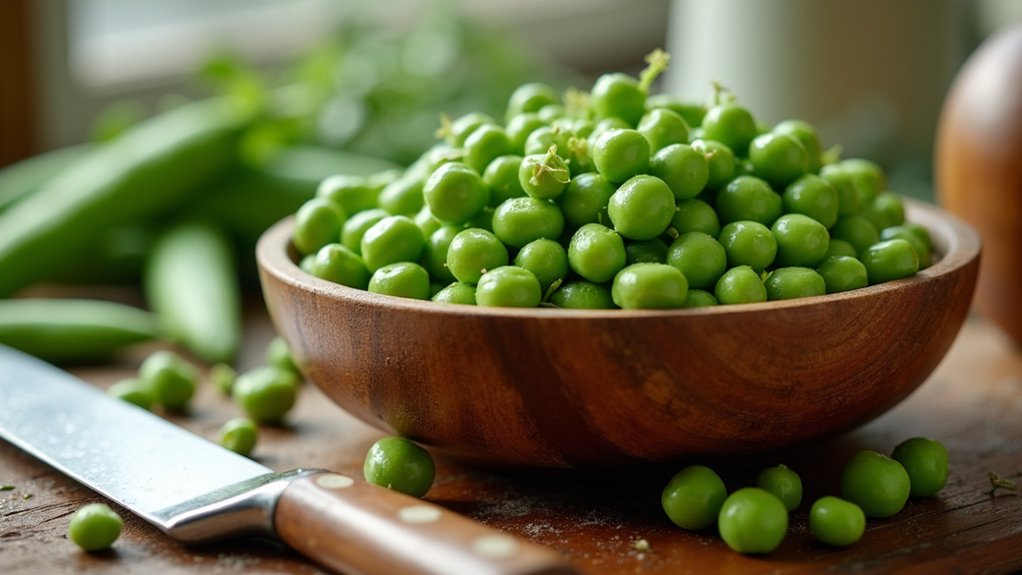
Before diving into the cooking process, let’s prepare those fresh peas, which are the star of our soup. I love using a variety of fresh pea varieties, like sweet green peas or sugar snap peas, for that burst of flavor. First, I rinse them under cold water to remove any dirt. Next, I’ll remove the pods if I’m using shelling peas—just pull the string and pop them open. For sugar snap peas, I simply trim the ends. Once they’re ready, I give them a quick chop, which helps release their vibrant sweetness. These pea preparation techniques not only enhance the taste but also bring a pop of color to my bowl. Trust me, your soup will shine with these fresh beauties!
Step 2. Simmer With Vegetable Broth
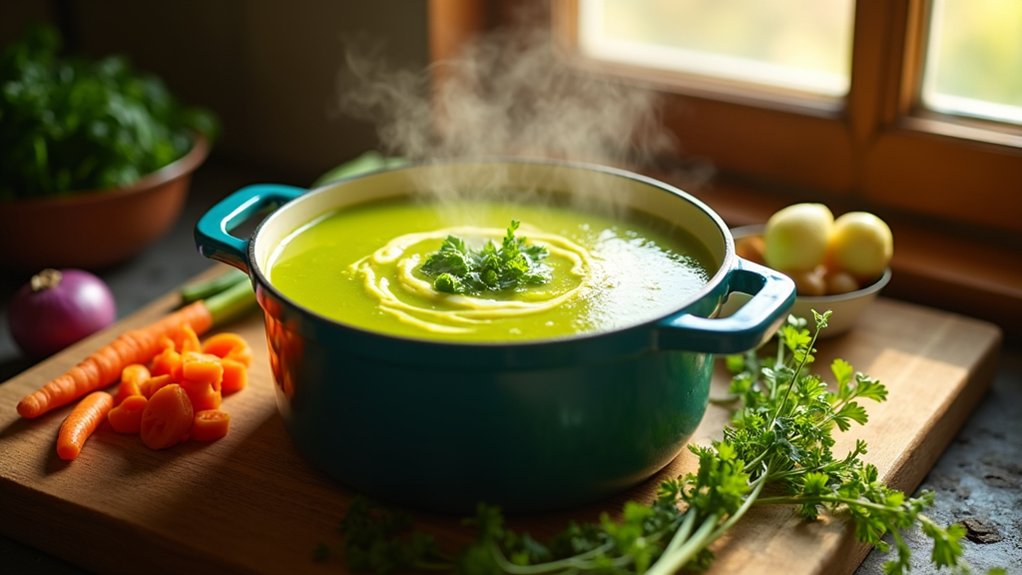
Once you’ve got those fresh peas ready, it’s time to immerse them in a warm bath of vegetable broth. Choosing the right broth can elevate your soup with amazing flavors and vegetable benefits. I love experimenting with different broth varieties, but here’s how I do it:
- Choose a rich vegetable broth that complements the sweetness of the peas.
- Add in diced carrots for a pop of color and natural sweetness.
- Toss in some chopped onions to create a savory base that enhances the overall flavor.
- Season with herbs like thyme or dill for that aromatic touch that’ll make your kitchen smell divine.
Let it all simmer gently, allowing those flavors to meld beautifully. Enjoy the process!
Step 3. Blend Until Smooth
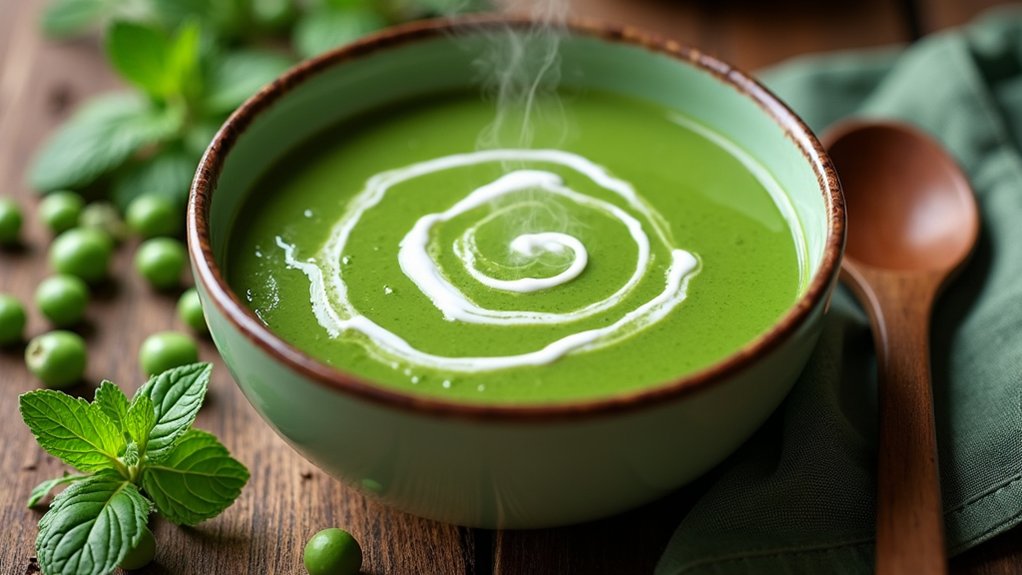
Grab your blender and get ready to transform that simmering mixture into a silky-smooth delight. I love using innovative blending techniques to achieve the perfect smooth texture for my pea soup. First, let the soup cool for a few minutes—this helps prevent splattering. Then, carefully pour the mixture into your blender, filling it only halfway to avoid overflow. Secure the lid tightly, and start blending on low, gradually increasing the speed. You’ll want to blend until it’s completely smooth, about 30 seconds or so. If you prefer a creamier consistency, feel free to blend longer. This step is where the magic happens, turning your vibrant soup into a luscious creation that’s ready for the next flavorful enhancement. Enjoy!
Step 4. Add Seasoning to Taste
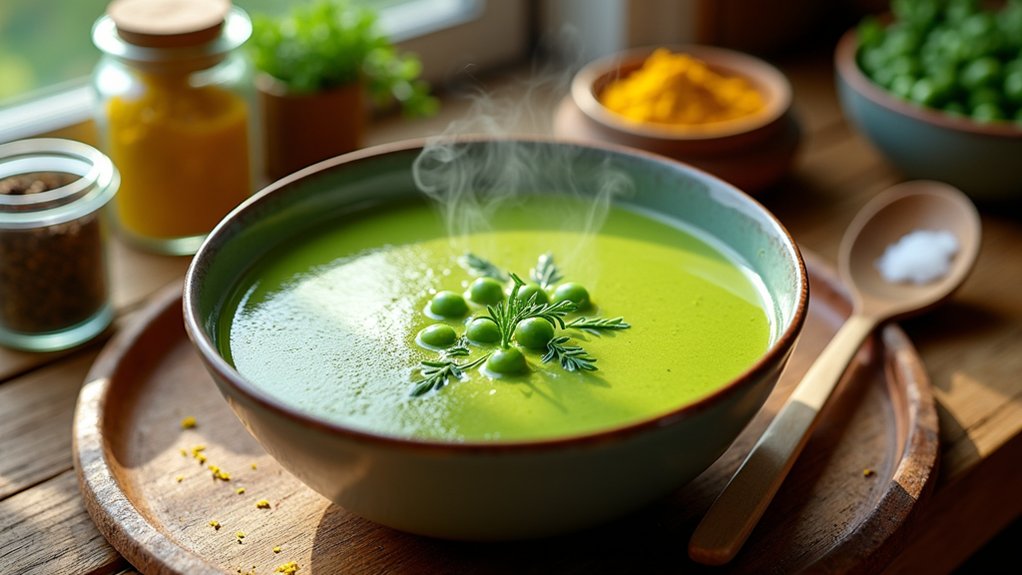
As you start to think about seasoning your pea soup, remember that this is where you can truly make it your own. The right seasoning options can elevate your soup and create exciting flavor profiles that reflect your personality. Here are a few ideas to get you started:
- Smoked paprika – Adds a warm, smoky depth that’s irresistible.
- Cumin – Offers a hint of earthiness that complements the peas beautifully.
- Lemon zest – Brings a bright, fresh acidity that balances the richness.
- Black pepper – A classic choice that adds just the right amount of heat.
Taste as you go, and don’t be afraid to experiment. After all, this soup is a blank canvas just waiting for your creative touch!
Step 5. Garnish With Fresh Herbs
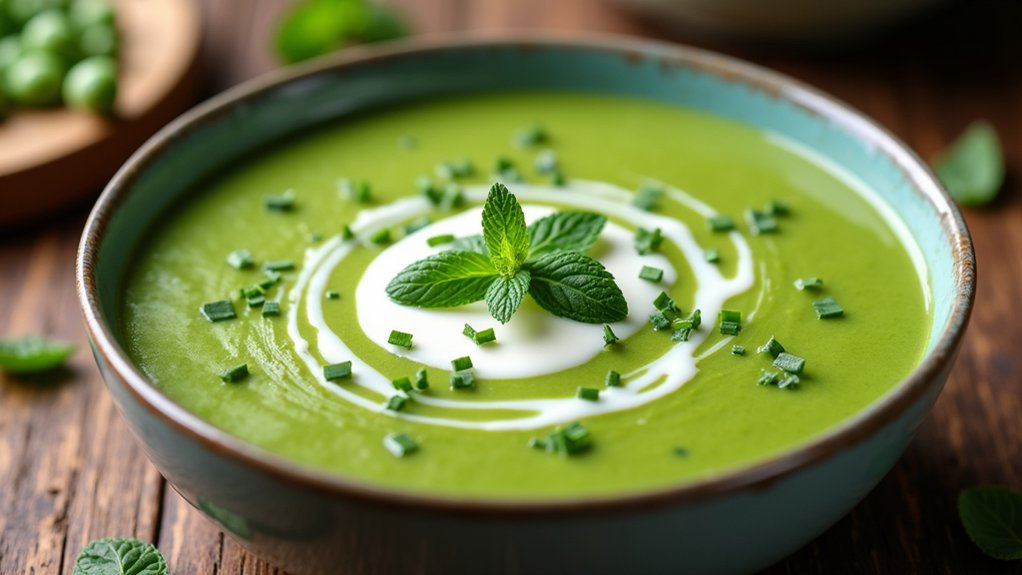
To truly bring your pea soup to life, garnishing with fresh herbs is a fantastic way to add a burst of flavor and color. When it comes to herb selection, I love using vibrant options like fresh mint, dill, or chives. Their unique tastes elevate the soup, making it feel gourmet. For garnish techniques, simply chop the herbs finely and sprinkle them on top just before serving. This not only adds visual appeal but also keeps the flavors bright. If you’re feeling adventurous, consider drizzling a bit of herb-infused oil for an extra layer of richness. Trust me, this simple step will impress your guests and make your pea soup unforgettable! Enjoy the delicious transformation!
Nutritional Guide

When it comes to cooking up a delicious batch of pea soup, understanding its nutritional value can make the experience even more rewarding. Pea soup isn’t just tasty; it offers numerous nutritional benefits. It’s loaded with protein, fiber, and essential vitamins, making it a fantastic addition to any diet. Here’s a quick guide to help you see what’s inside:
| Nutrient | Amount per Serving |
|---|---|
| Protein | 8 grams |
| Fiber | 7 grams |
| Vitamin A | 30% DV |
Keep in mind any dietary considerations, especially if you’re managing sodium or calorie intake. Exploring pea soup’s benefits not only enhances your meal but also encourages healthier eating habits. Grab your ingredients, and let’s cook!
Final Thoughts
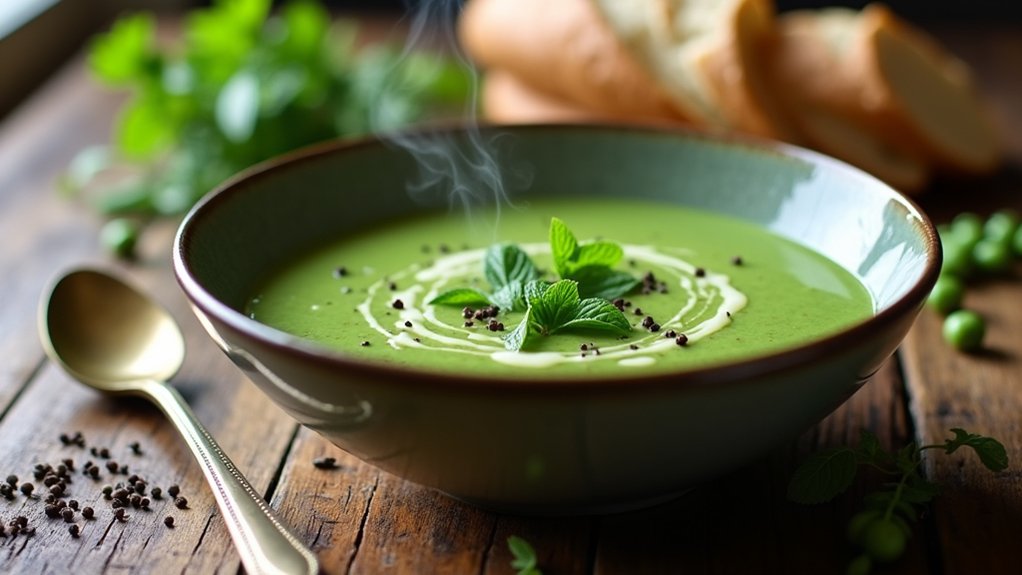
Pea soup is more than just a meal; it’s a comforting dish that brings back memories of family gatherings and cozy evenings. I love experimenting with soup variations to keep things exciting. You can easily elevate your pea soup with these creative ideas:
- Add crispy bacon for a savory crunch.
- Stir in fresh herbs like dill or mint for a burst of flavor.
- Blend in some spinach for added nutrition and color.
- Serve with a dollop of sour cream for creaminess.
Don’t forget to pair it with crusty bread or a light salad for a delightful experience. By exploring these serving suggestions, you’ll find that pea soup can be a canvas for culinary creativity, making every bowl a new adventure!
Frequently Asked Questions
Can I Use Frozen Peas Instead of Fresh Peas?
I love using frozen peas for their convenience and vibrant color. They blend smoothly, giving a creamy texture that rivals fresh peas. Plus, frozen peas retain nutrients, making them a smart, innovative choice for any dish!
What Type of Peas Is Best for Soup?
I’ve found that split peas work best for soup because they cook down beautifully, creating a creamy texture. Dried peas can also be used, but split peas offer that rich flavor and consistency I love.
How Long Does Pea Soup Last in the Fridge?
Pea soup lasts about three to five days in the fridge. I always use airtight containers for proper storage. If I’m not finishing it soon, I freeze some for longer shelf life—great innovation for meal prep!
Can I Freeze Leftover Pea Soup?
Absolutely, I freeze leftover pea soup all the time! Just use proper freezing techniques—like cool storage containers or freezer bags—to preserve its flavor and texture. It’s a fantastic way to enjoy it later!
What Are Some Common Toppings for Pea Soup?
Imagine a culinary renaissance; fresh herbs elevate flavors, while crispy bacon adds a delightful crunch. I love experimenting with toppings like these, transforming humble soup into a gourmet experience that excites the palate.
Conclusion
So there you have it—my beloved pea soup recipe that warms both the belly and the heart. Remember, “a watched pot never boils,” so while you’re waiting for it to cook, maybe catch up on a good book or chat with a friend. Cooking is all about sharing moments and flavors, and I hope this soup brings smiles to your table. Enjoy every spoonful, and don’t forget to make some memories along the way!