


Making a delicious vegetable soup is easier than you think! Start by chopping your favorite fresh veggies, then sauté them in olive oil for a lovely aroma. Next, add vegetable broth and let it simmer until everything is tender. Season with fresh herbs for that extra pop of flavor. It’s nutritious, comforting, and perfect for any season. Trust me, you’ll enjoy experimenting with different ingredients to create your own unique soup masterpiece! Let’s explore more tips and variations!
Contents
History

When I think about the history of vegetable soup, I can’t help but feel a sense of warmth and nostalgia, as it’s a dish that has been comforting families for generations. Its medieval origins reveal how peasants would toss leftover vegetables into a pot, creating a hearty meal that was both nutritious and resourceful. Over time, regional variations emerged, each culture adding its unique flair. For instance, in Italy, you’ll find minestrone packed with beans and pasta, while in Eastern Europe, borscht showcases vibrant beets. This adaptability is what makes vegetable soup so exciting; it invites creativity and innovation in the kitchen. So, whether you’re revisiting a classic or experimenting with new flavors, you’re part of a rich culinary tradition.
Recipe
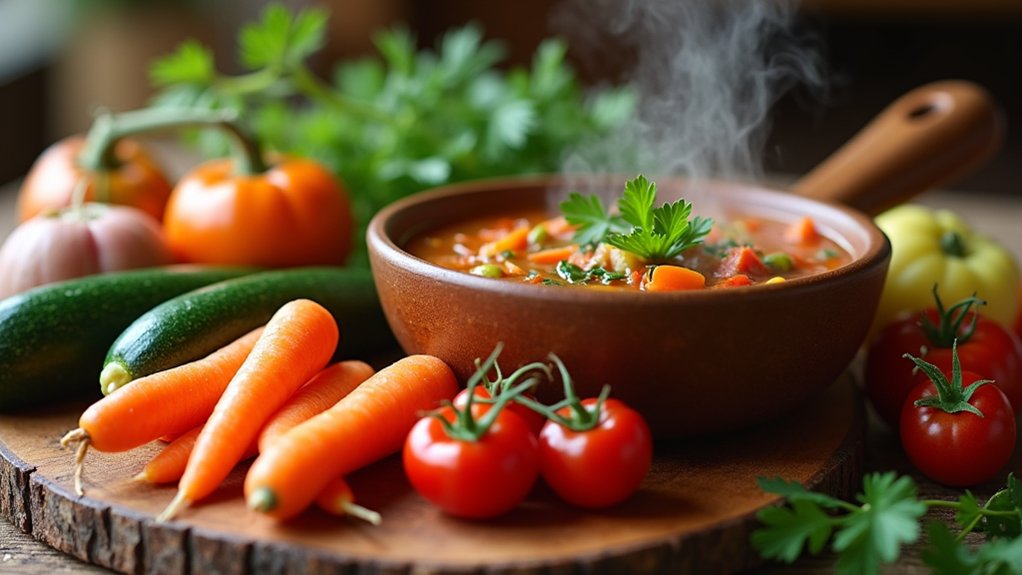
Vegetable soup is a comforting and nutritious dish that can be enjoyed year-round. It’s an excellent way to use up leftover vegetables and can be easily customized based on the ingredients you have on hand. Packed with vitamins and minerals, this dish is not only delicious but also supports a healthy lifestyle. Whether served as a light lunch or a hearty dinner, vegetable soup is sure to warm your soul and satisfy your hunger.
Making vegetable soup is both simple and rewarding. You can create a rich, flavorful base using broth and herbs, then add a variety of fresh or frozen vegetables. The best part is that you can adjust the seasoning to your taste, making it a perfect canvas for creativity in the kitchen. With just a little time and effort, you can prepare a wholesome meal that is perfect for the entire family.
Making vegetable soup is a delightful way to create a healthy, customizable meal that brings the whole family together.
Ingredients:
- 2 tablespoons olive oil
- 1 onion, chopped
- 2 garlic cloves, minced
- 2 carrots, diced
- 2 celery stalks, diced
- 1 bell pepper, chopped
- 1 zucchini, diced
- 1 cup green beans, cut into pieces
- 4 cups vegetable broth
- 1 can (14.5 oz) diced tomatoes
- 1 teaspoon dried thyme
- 1 teaspoon dried oregano
- Salt and pepper to taste
- Fresh parsley for garnish (optional)
In a large pot, heat the olive oil over medium heat. Add the chopped onion and garlic, sautéing until the onion becomes translucent. Next, add the diced carrots, celery, and bell pepper, cooking for about 5 minutes. Then, stir in the zucchini and green beans, followed by the vegetable broth and diced tomatoes. Season with thyme, oregano, salt, and pepper. Bring the soup to a boil, then reduce the heat and let it simmer for about 30 minutes, or until the vegetables are tender. Taste and adjust the seasoning if necessary. Serve hot, garnished with fresh parsley if desired.
When making vegetable soup, feel free to experiment with different vegetables depending on the season or what you have available. Adding leafy greens like spinach or kale can boost the nutritional value, You can also stir in a spoonful of dehydrated vegetable powder to intensify the veggie flavor without changing the texture. while a splash of lemon juice right before serving can brighten the flavors. If you enjoy a bit of heat, consider adding red pepper flakes or a dash of hot sauce. Vegetable soup also freezes well, so make a big batch and store individual portions for quick meals on busy days!
Cooking Steps
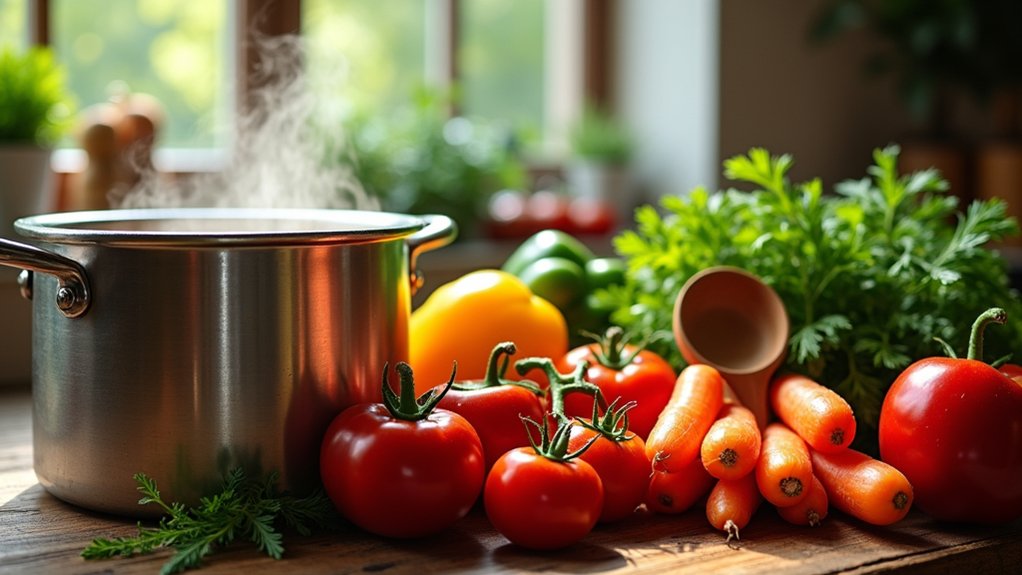
Now that we’ve gathered our ingredients, let’s jump into the cooking steps! First, I like to chop the fresh vegetables finely, so they blend nicely in the soup. After that, we’ll sauté them in olive oil to bring out their flavors before adding the vegetable broth and letting it all simmer until tender.
Step 1. Chop Fresh Vegetables Finely
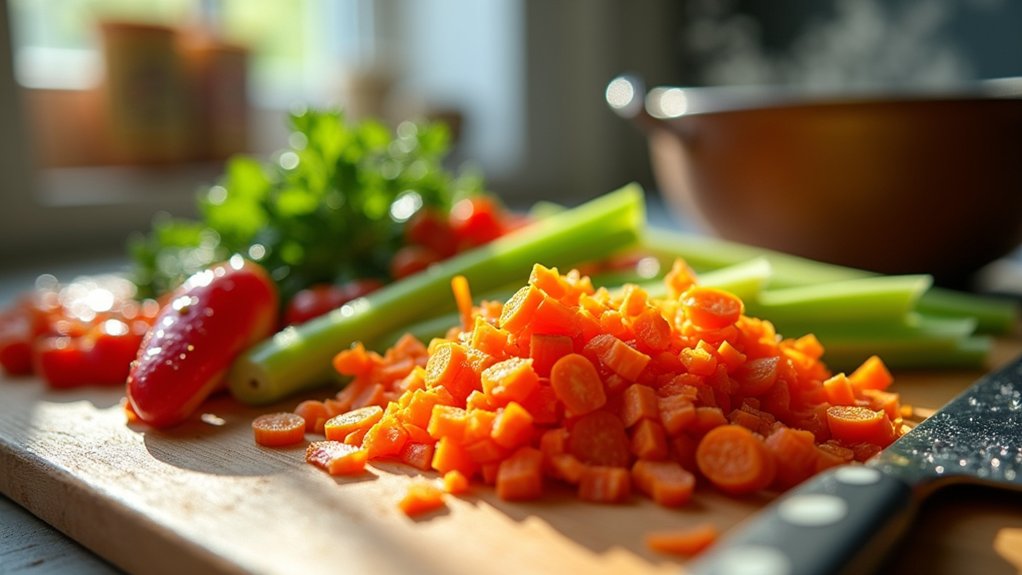
Chopping fresh vegetables finely is an essential step that can truly elevate your soup. Using various chopping techniques, you can create a beautiful blend of textures and flavors. I love to experiment with vegetable varieties like carrots, bell peppers, and zucchini. Start by washing them thoroughly, then cut them into uniform pieces. This guarantees they cook evenly and release their flavors harmoniously. Don’t rush the process; take your time to enjoy the rhythm of chopping. A sharp knife makes a world of difference, making it easier and more enjoyable. As you chop, let your imagination run wild—think about how each vegetable contributes to the overall taste. Remember, finely chopped veggies will meld seamlessly into your soup, enhancing every spoonful!
Step 2. Sauté Vegetables in Olive Oil
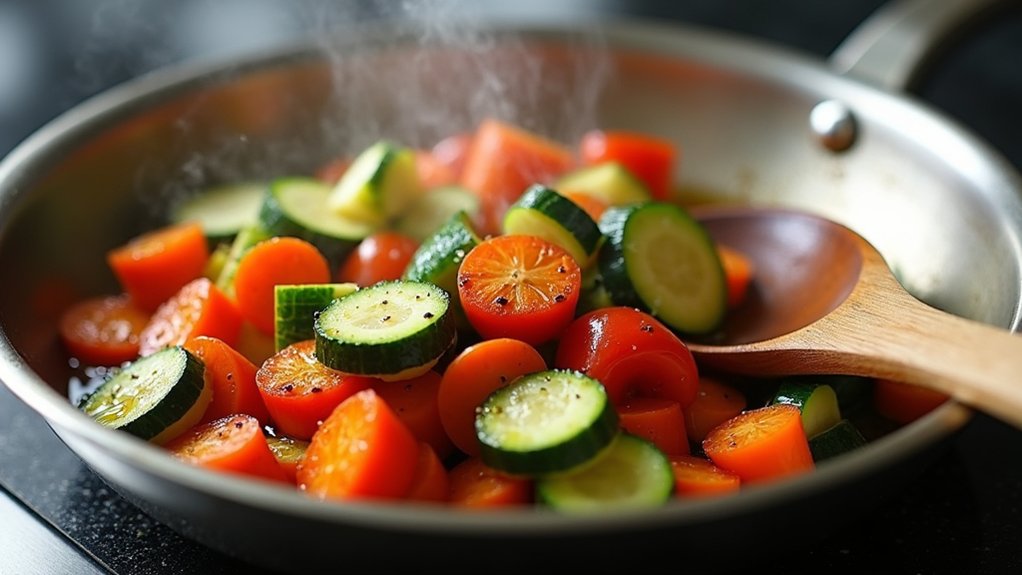
Once you’ve finely chopped your fresh vegetables, it’s time to bring them to life with a little heat and oil. I love using olive oil for its incredible benefits, like enhancing flavors and providing healthy fats. Heat a generous splash of olive oil in your pan over medium heat, letting it shimmer just a bit. Then, toss in your vegetables and embrace some sauté techniques! Stir them frequently, allowing them to soften and caramelize beautifully. The aroma will be irresistible, transporting you to cozy kitchens of the past. Cook until they’re tender yet still vibrant, making every bite a celebration of freshness. This step is essential, setting the stage for the delicious soup that’s about to come together!
Step 3. Add Vegetable Broth
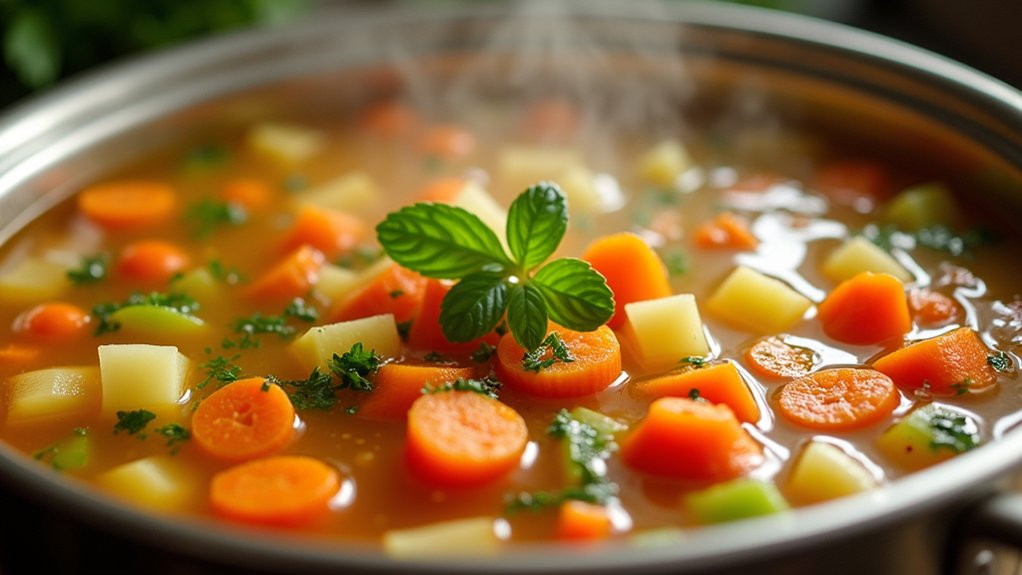
As the vegetables begin to soften and release their delightful aromas, it’s time to take the next step by adding vegetable broth. This is where the magic happens! I pour in the broth, and I can instantly feel the warmth and comfort enveloping my kitchen. The broth benefits are undeniable—it deepens the flavors while providing a nutritious base for my soup. You can even experiment with broth variations, like adding a touch of miso for an umami kick or a splash of coconut milk for a creamy twist. Each choice adds a unique personality to your soup, making it truly your own. So, let’s pour in that broth and elevate our delicious creation to new heights!
Step 4. Simmer Until Vegetables Are Tender

Now that we’ve added the vegetable broth, it’s time to let everything simmer until the vegetables are tender. I usually set the heat to medium-low, allowing the flavors to meld beautifully without rushing the process. This is where the magic happens! Using good simmering techniques, I keep an eye on the pot, stirring occasionally to guarantee even cooking. After about 20 to 30 minutes, I check for that perfect vegetable tenderness; they should be soft but not mushy. If you need a taste test, go for it! This step is essential for developing rich flavors, so resist the urge to rush. Enjoy this moment; the aroma will transport you to your favorite cozy kitchen!
Step 5. Season With Fresh Herbs
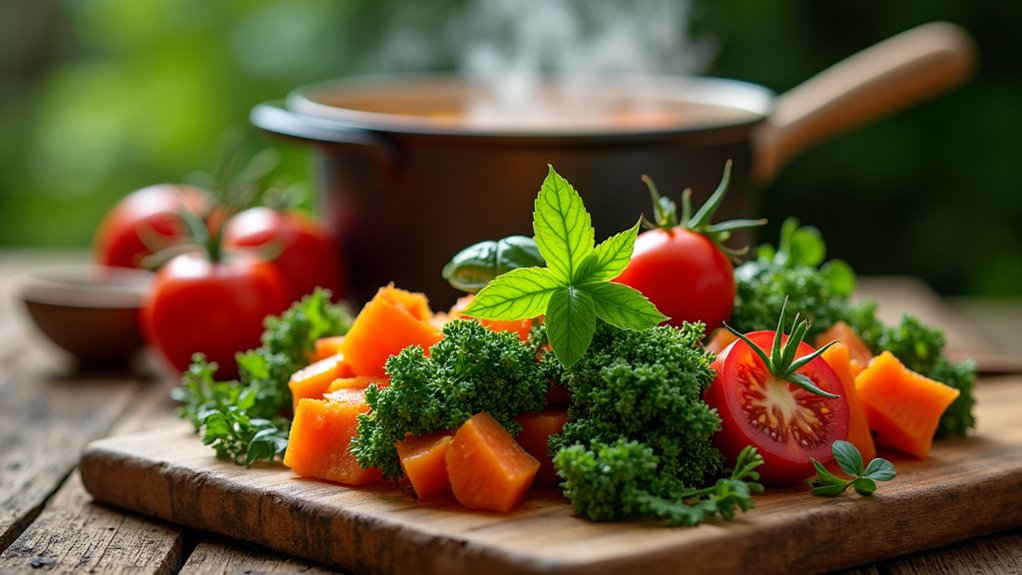
To elevate the flavors of your vegetable soup, adding fresh herbs is a game-changer! I love to experiment with basil, thyme, or parsley, as they not only enhance the flavor but also provide amazing herb benefits. Just before serving, I chop a handful of these vibrant herbs and stir them in. Trust me, this simple step transforms the soup from good to extraordinary! The aromatic oils release during cooking, bringing a freshness that’s hard to beat. If you’re feeling adventurous, try mixing different herbs for a unique twist. This flavor enhancement creates a delightful surprise with every spoonful, making your soup a standout dish. So, don’t skip this vital step—your taste buds will thank you!
Nutritional Guide
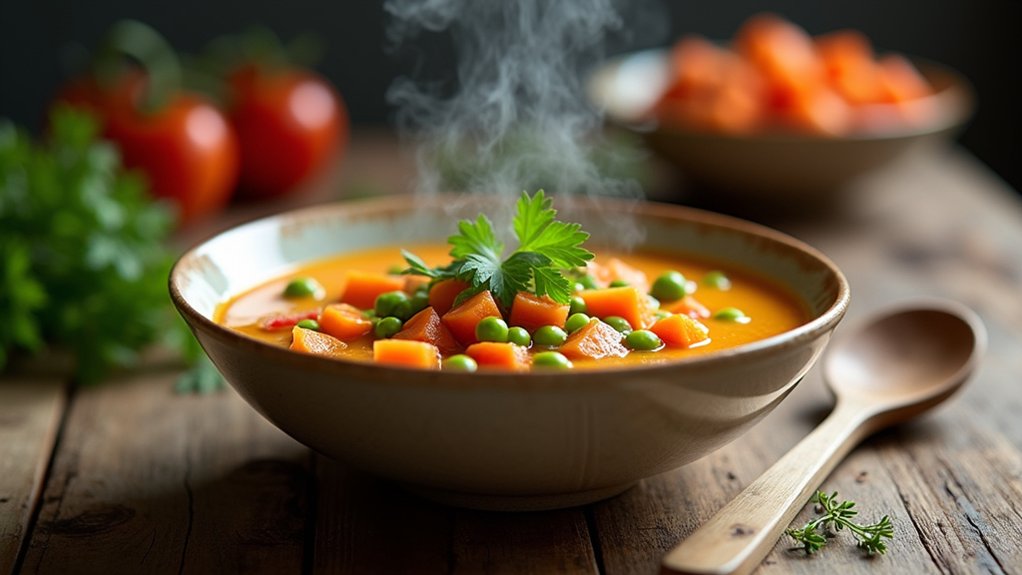
When you think about vegetable soup, it’s easy to get excited about the warm, comforting flavors, but the nutritional benefits are just as important. Packed with vitamins and minerals, this dish can cater to various dietary restrictions, making it a versatile choice. Here’s a quick guide to the nutritional profile of common soup ingredients:
| Nutrient | Benefit |
|---|---|
| Vitamin A | Supports eye health |
| Fiber | Aids digestion and keeps you full |
| Vitamin C | Boosts immunity |
| Potassium | Regulates blood pressure |
| Folate | Essential for cell function |
With just a few tweaks, you can create a delicious soup that not only warms your soul but also nourishes your body. Let’s embrace these health benefits while enjoying every spoonful!
Final Thoughts
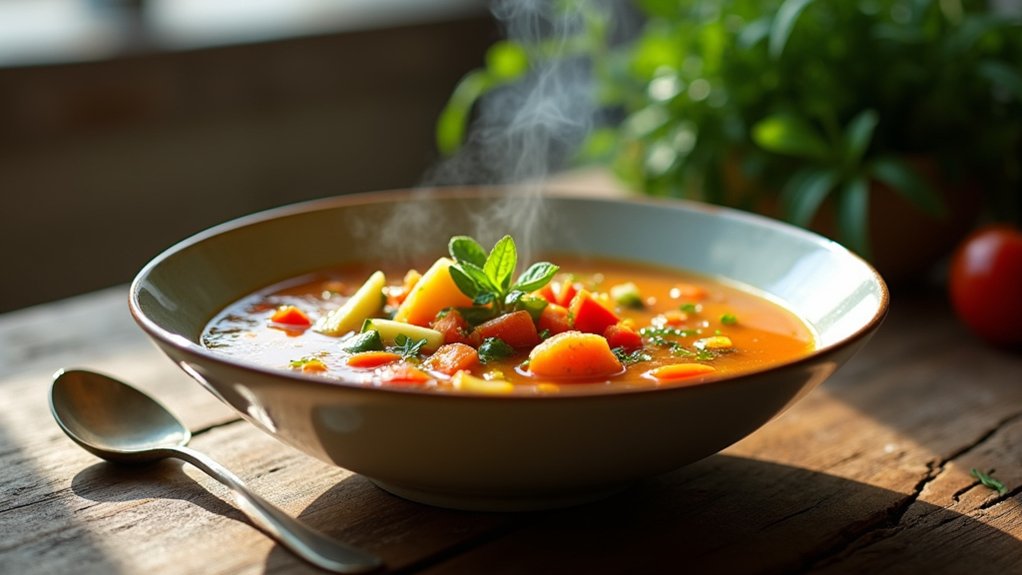
As you wrap up your culinary journey with this vegetable soup, it’s clear that this dish isn’t just about satisfying your hunger; it’s a celebration of flavors and health. I love how this recipe allows for endless soup variations, letting your creativity shine. You can mix and match veggies, spices, or even add grains for a new twist each time. The health benefits are incredible, too—packed with nutrients, this soup promotes wellness while comforting the soul. I encourage you to experiment and find your perfect blend. Whether you’re cozying up on a cold day or sharing with loved ones, this vegetable soup will surely bring joy and nourishment. Let’s keep innovating in the kitchen!
Frequently Asked Questions
Can I Use Frozen Vegetables in the Soup Recipe?
Absolutely, I love using frozen vegetables in my soups! They’re packed with nutrients and save time. Just toss ’em in frozen, and remember to adjust cooking times for a perfectly flavorful result. Enjoy experimenting!
How Long Will the Vegetable Soup Last in the Fridge?
I’ve found that my soup lasts about three to four days in the fridge. For ideal soup storage, I recommend using airtight containers and keeping it in the back of the refrigerator—where it’s coldest!
Can I Make Vegetable Soup in a Slow Cooker?
I love making vegetable soup in a slow cooker. For the best soup consistency, I recommend adjusting liquid levels. My slow cooker tips include adding hearty veggies first and stirring occasionally for even flavor distribution.
What Are Some Good Herbs to Add for Flavor?
Did you know that 70% of home cooks love experimenting with herbs? I often use herb combinations like thyme and rosemary for flavor balancing, adding a fresh twist to my dishes that really elevates the taste.
Is Vegetable Soup Vegan-Friendly?
Absolutely, vegetable soup can be vegan-friendly! I love using fresh vegetables and herbs for flavor. With vegan ingredients, it’s packed with health benefits, making it a delicious, innovative option for anyone seeking nutritious meals.
Conclusion
So, there you have it—a warm bowl of vegetable soup that feels like a hug on a chilly day. As you ladle it into bowls and share it with loved ones, you’re not just serving food; you’re sharing comfort and memories. I hope this recipe inspires you to get creative in the kitchen and explore your own flavor combinations. So grab your veggies, roll up your sleeves, and let’s get cooking! Enjoy every delicious spoonful!