
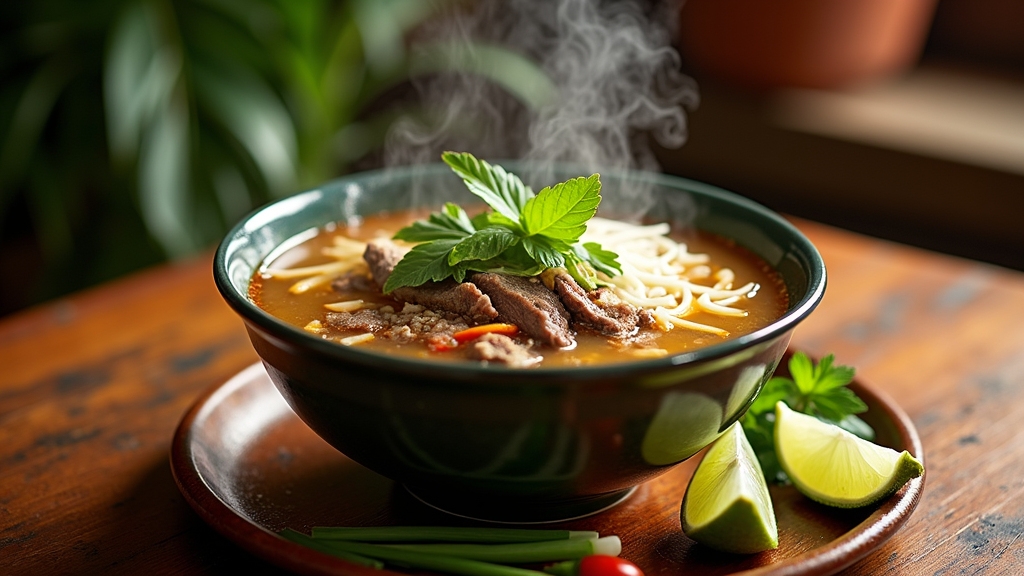
If you’re looking to whip up a comforting bowl of pho soup, start by simmering beef or chicken bones with onion, ginger, and spices. You’ll want to let it bubble away for at least four hours. Once you’ve strained the rich broth, serve it over soft rice noodles, topped with fresh herbs, lime, and optional extras like jalapeños or bean sprouts. It’s a delightful way to share a meal with loved ones, and there’s always more to explore!
Contents
History
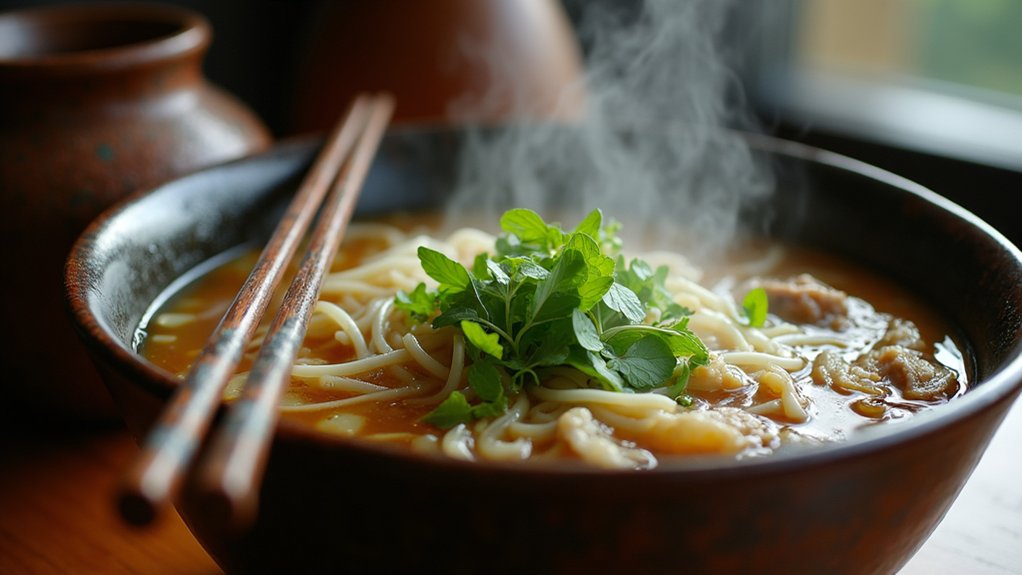
When I think about the history of pho, I can’t help but feel a sense of excitement, knowing that this beloved Vietnamese dish has a rich and fascinating background. Its origins lie in the early 20th century, blending the French influence from colonial times with traditional Vietnamese culture. Picture the French introducing ingredients like beef and baguettes, which inspired the hearty broth and savory flavors we now cherish. As I explore this culinary journey, I see how pho evolved from street food to a staple in homes and restaurants worldwide. It’s more than just a meal; it’s a symbol of resilience and creativity, showcasing how cultures can come together to create something spectacular. Isn’t that what innovation is all about?
Recipe
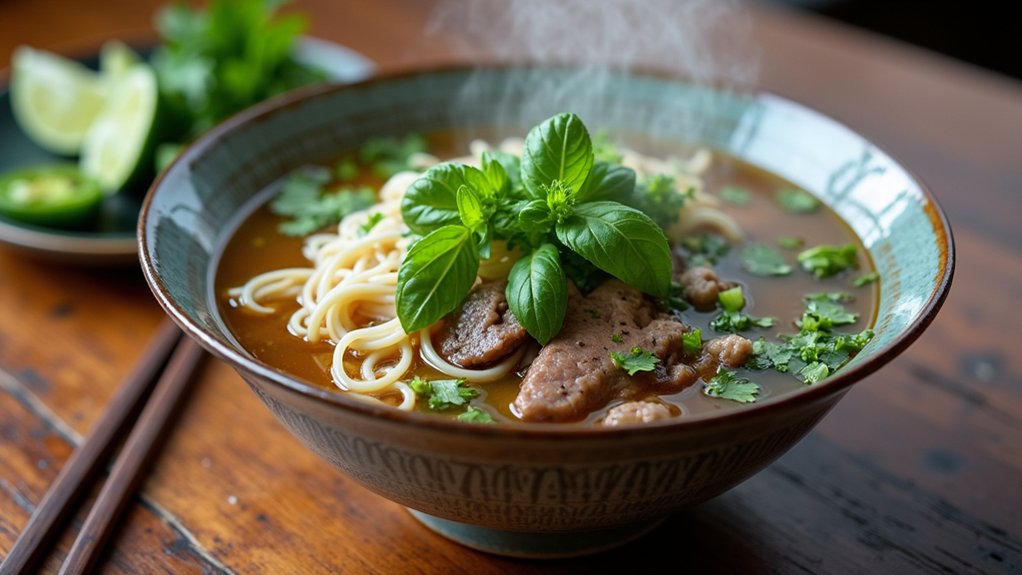
Pho soup is a beloved Vietnamese dish known for its rich and aromatic broth, tender meat, and fresh herbs. The key to a great pho lies in the long simmering of bones and spices, which creates a depth of flavor that is truly comforting. Traditionally served with rice noodles and a variety of toppings such as bean sprouts, lime, and fresh herbs, pho can be customized to your taste preferences, making it a versatile meal for any occasion.
To achieve the best results, take your time with the broth, allowing it to simmer for several hours to extract maximum flavor. Using high-quality ingredients, including fresh herbs and spices, will elevate your pho to restaurant-quality. Once you have mastered the basics, feel free to experiment with different proteins, such as beef, chicken, or tofu, to suit your dietary needs.
Ingredients:
- 2 pounds beef bones (or chicken bones)
- 1 onion, halved
- 1 ginger root, halved and sliced
- 5-6 star anise
- 4-5 cloves
- 1 cinnamon stick
- 2 tablespoons fish sauce
- Salt, to taste
- 8 cups water
- Rice noodles
- Fresh herbs (basil, cilantro, mint)
- Bean sprouts
- Lime wedges
- Sliced jalapeños (optional)
Cooking Instructions:
Begin by roasting the onion and ginger in a dry skillet over medium heat until they are slightly charred, about 5-7 minutes. In a large pot, combine the beef bones, roasted onion and ginger, star anise, cloves, cinnamon stick, fish sauce, and salt. Pour in the water and bring to a boil. Once boiling, reduce the heat and let it simmer for at least 4 hours, skimming off any foam or impurities that rise to the surface. After simmering, strain the broth to remove the solids and return the clear broth to the pot. Cook the rice noodles according to package instructions, then assemble the pho by placing the noodles in bowls, ladling the hot broth over them, and topping with your choice of herbs, bean sprouts, lime, and jalapeños.
Extra Tips:
For an even richer flavor, consider adding additional spices such as cardamom or coriander seeds to the broth. If you prefer a clearer broth, you can blanch the bones in boiling water for a few minutes before starting the simmering process. This helps remove impurities and gives a cleaner taste. Feel free to adjust the seasoning with more fish sauce or salt to suit your palate. To save time, you can prepare the broth in advance and store it in the refrigerator or freezer, making it easy to enjoy homemade pho whenever you crave it!
Cooking Steps
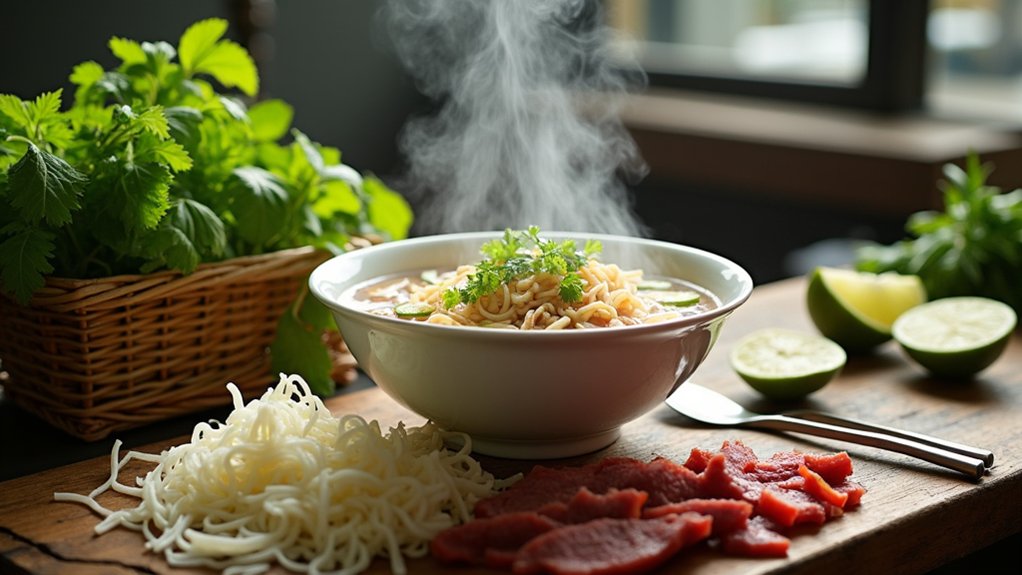
Now that we’ve got our ingredients ready, let’s jump into the cooking steps! First, I’ll walk you through preparing the broth base, which is the heart of our pho. From there, we’ll layer in aromatics, noodles, and proteins, finishing it off with fresh herbs and lime to bring everything together.
Step 1. Prepare the Broth Base
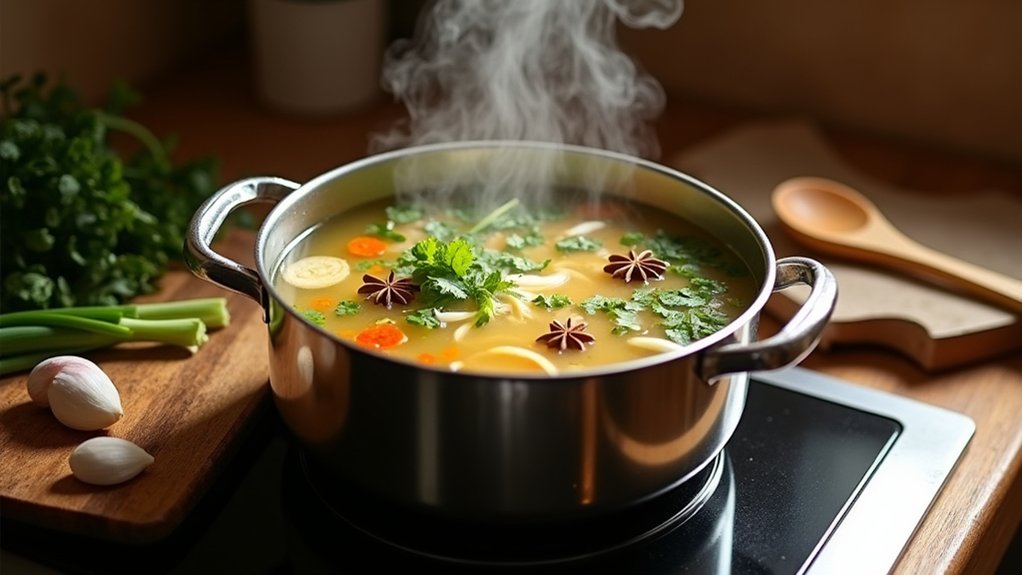
To create a flavorful broth base for our soup, I love to start by roasting the bones and spices, which adds a depth of flavor that really makes a difference. I typically use beef or chicken bones, depending on the broth type I’m aiming for. Roasting them in the oven for about 30 minutes brings out those rich, savory notes that make my pho stand out. While that’s happening, I toast spices like star anise, cloves, and cinnamon in a dry pan, enhancing their aromatic qualities. This step is essential to achieving that complex flavor depth we crave. Once everything’s nicely roasted, I combine the bones and spices with water, ready to simmer into the perfect broth for our pho.
Step 2. Add Aromatics and Spices

Once the broth is simmering, it’s time to elevate those flavors by adding aromatics and spices. This is where the magic happens! The right mix of ingredients will create those irresistible flavor profiles that make pho unforgettable. Here are three essential additions:
- Star anise: Just a couple of whole pods will impart a sweet, licorice-like essence.
- Cinnamon stick: One stick adds warmth and depth, making the broth feel cozy.
- Aromatic herbs: Fresh basil, cilantro, and mint are key to brightening the dish and enhancing those complex flavors.
Stir these into the pot, and let them infuse for about 15 minutes. Trust me, this step transforms your broth into a fragrant masterpiece, setting the stage for an incredible pho experience!
Step 3. Add Noodles and Proteins
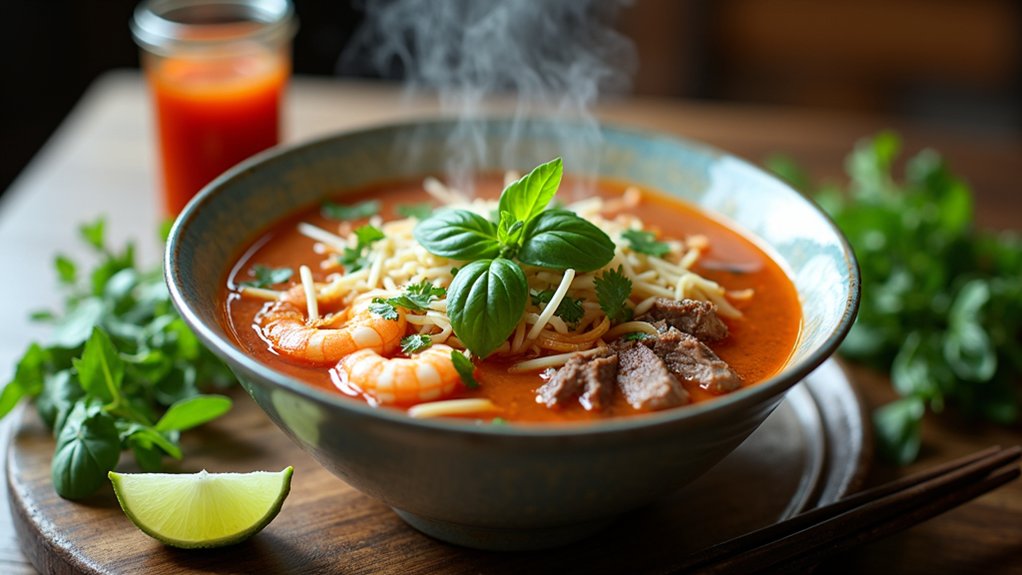
It’s time to bring the heart of your pho to life with the addition of noodles and proteins. Start by choosing your noodle types; I love using rice noodles for that classic texture, but you might experiment with egg noodles for a twist. Cook the noodles according to the package instructions, then set them aside. Next, let’s talk protein options! Thinly sliced beef, chicken, or even tofu can elevate your dish. If you’re feeling adventurous, why not try shrimp or even seared scallops? Once everything’s prepped, add the cooked noodles to your broth, letting them soak up all that rich flavor. Then, gently place your chosen proteins on top, allowing them to cook just enough to stay tender. Enjoy!
Step 4. Garnish With Fresh Herbs
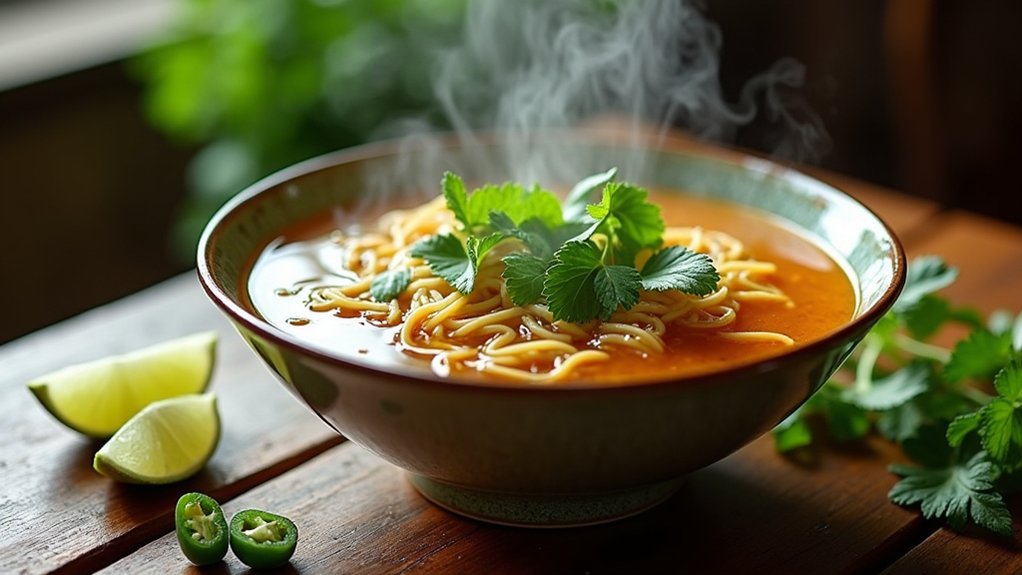
As you prepare to garnish your pho, fresh herbs will bring a burst of flavor and color that truly elevates the dish. The right herbs can transform your bowl into a culinary masterpiece. Here’s what I love to add:
- Fresh Basil: Its aromatic notes add depth and a hint of sweetness that complements the broth beautifully.
- Cilantro: Besides its vibrant flavor, cilantro benefits digestion and adds a revitalizing touch that brightens every spoonful.
- Mint: A sprinkle of mint introduces a cool contrast, enhancing the overall experience.
These fresh herbs don’t just enhance the visual appeal; they create a harmony of tastes that makes each bite unforgettable. So don’t skimp—load up your pho and savor the explosion of flavors!
Step 5. Serve With Lime Wedges
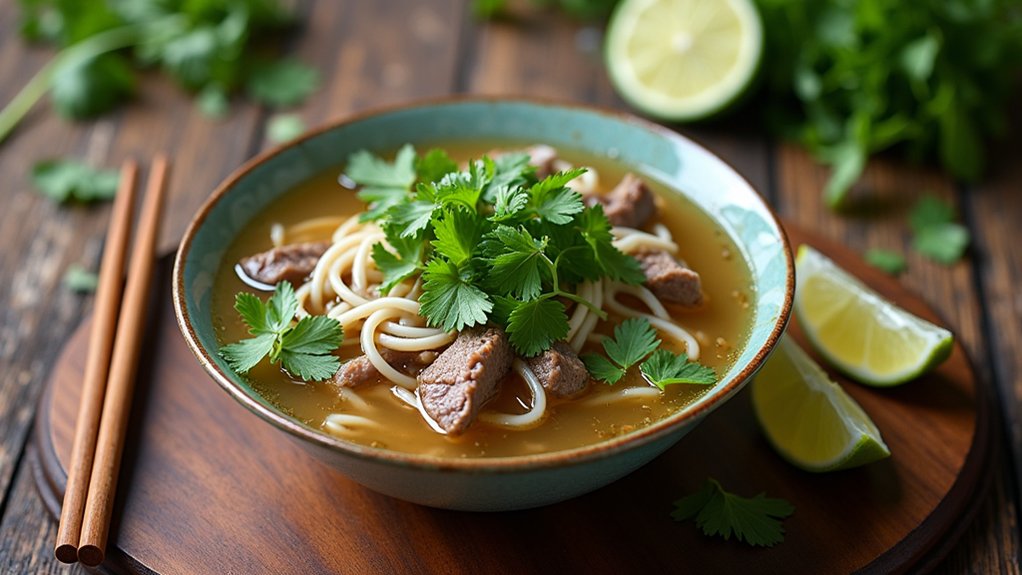
Serving your pho with lime wedges adds a zesty kick that brightens up the entire dish. It’s one of my favorite tricks for flavor enhancement. Just a squeeze of fresh lime elevates the broth, balancing the rich flavors beautifully. Plus, the lime benefits go beyond taste; it’s packed with vitamin C, giving your meal a healthy twist.
When I serve pho, I love to present the lime wedges on the side, inviting everyone to customize their own bowls. The vibrant acidity contrasts perfectly with the savory broth, creating an exciting burst of flavor in every bite. So, don’t skip this step! Grab those limes, and let’s take your pho experience to a whole new level!
Nutritional Guide
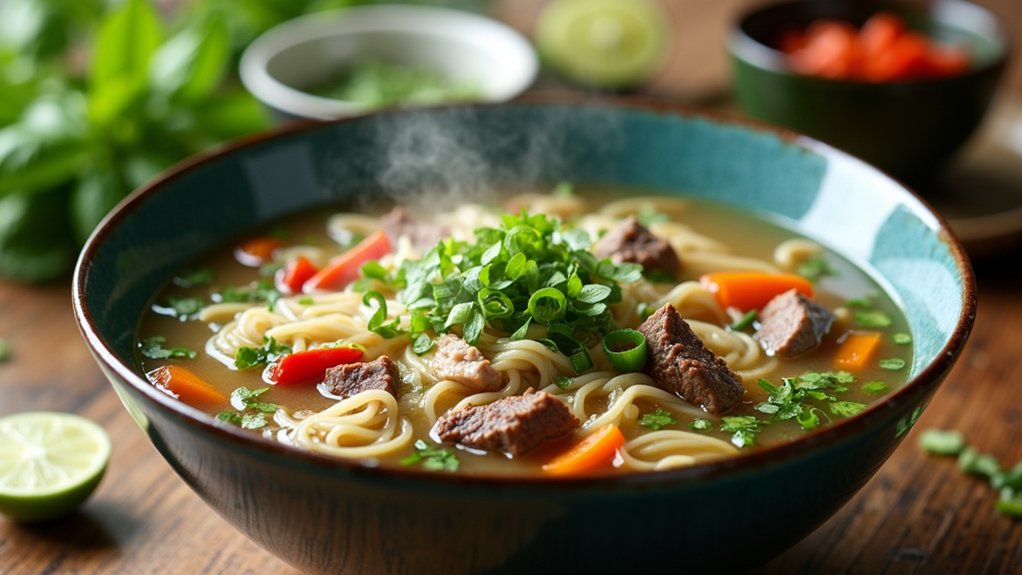
When you plunge into making pho soup, you’ll not only enjoy its delicious flavors but also benefit from a nutritious meal that’s packed with essential ingredients. The balance of proteins, vegetables, and spices provides significant nutritional benefits, making it a delightful choice for health-conscious eaters.
Here’s a quick ingredient analysis to highlight what makes pho so great:
| Ingredient | Nutritional Benefits | Common Uses |
|---|---|---|
| Rice Noodles | Great source of carbs | Base of the soup |
| Beef or Chicken | High in protein | Main protein source |
| Herbs (Basil) | Rich in vitamins A & C | Adds flavor and aroma |
| Bean Sprouts | Low-calorie, fiber-rich | Crunchy topping |
| Broth | Hydrating and nourishing | Foundation of the dish |
Dive in and enjoy!
Final Thoughts
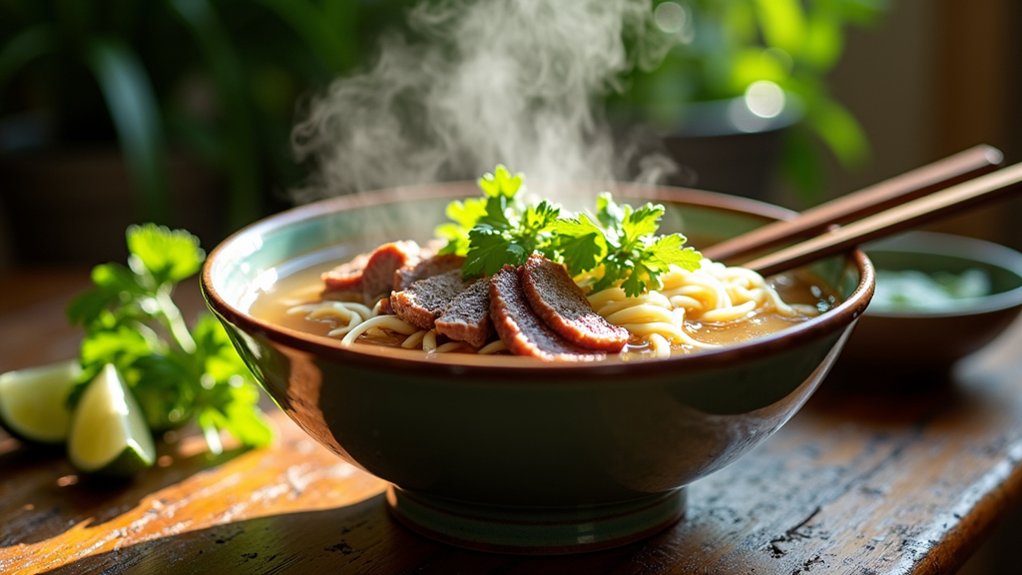
Cooking pho soup isn’t just about following a recipe; it’s an experience that brings warmth and comfort to the table. I love how this dish allows for endless creativity with soup variations and flavor profiles. Each time I make it, I discover something new. Here are a few tips to elevate your pho game:
- Experiment with Broth: Try adding different spices like star anise or cinnamon for a unique twist.
- Noodle Options: Switch up the rice noodles for whole wheat or zoodles for a healthier option.
- Toppings Galore: Don’t limit yourself—add unusual garnishes like pickled radishes or grilled pineapple to surprise your guests.
Pho is more than just a meal; it’s a beautiful way to connect and share love through food.
Frequently Asked Questions
Can I Use a Slow Cooker for Pho Soup?
Absolutely, I love using my slow cooker for pho! The slow cooker benefits include enhanced flavor development and convenient cooking techniques. It lets me enjoy a delicious, aromatic broth without constant attention—perfect for busy days!
What Types of Meat Can I Use in Pho?
When it comes to pho, the meat options are endless! I love using various beef varieties like brisket and flank, or trying tender chicken options for a twist. You’ll never run out of delicious possibilities!
Is Pho Soup Gluten-Free?
Yes, pho can be gluten-free! I always check my pho ingredients for gluten alternatives, like rice noodles and gluten-free sauces. It’s a delicious way to enjoy this classic dish without compromising on flavor!
How Can I Make Pho Vegetarian?
To make pho vegetarian, I boil a heavenly vegetarian broth, throwing in aromatic herbs and spices. I then load it with plant-based proteins like tofu and tempeh, creating a bowl bursting with flavor and creativity!
What Toppings Are Traditional for Pho Soup?
For traditional pho, I love adding fresh basil, lime wedges, sliced chilies, and crunchy bean sprouts. These ingredients really elevate the dish, giving it that authentic flavor while allowing for some innovative twists if you desire!
Conclusion
Making pho soup isn’t just about following a recipe; it’s a journey that connects us to its rich history and vibrant culture. As I stirred the broth and added fresh herbs, I felt a wave of nostalgia wash over me, reminding me of family gatherings and shared meals. I hope you feel inspired to create your own delicious bowl of pho, bringing warmth and joy to your table. So, grab those ingredients and let the cooking adventure begin!