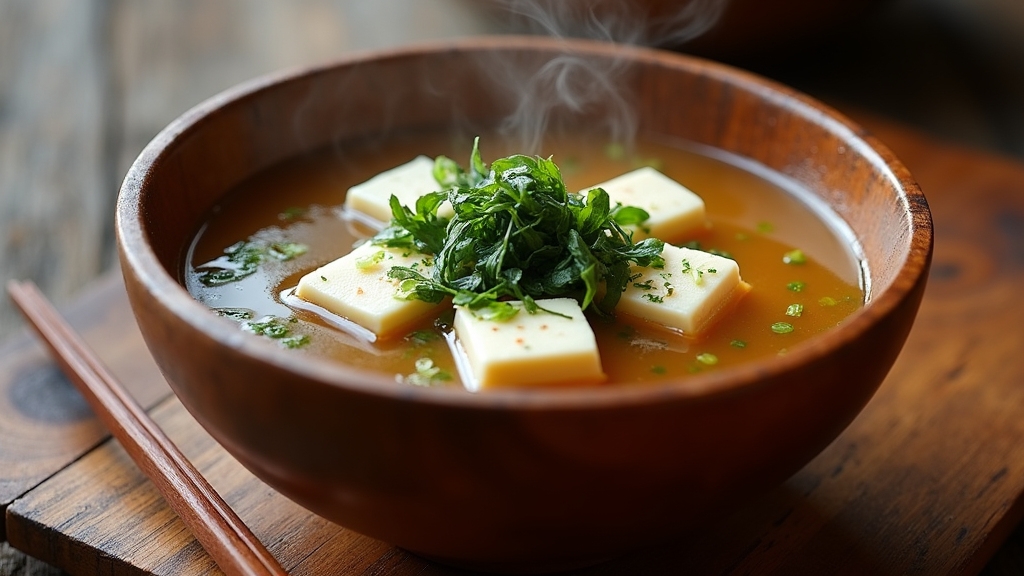
Miso soup is such a comforting dish! To make it, you’ll need water, kombu, bonito flakes, miso paste, tofu, dried wakame seaweed, and green onions. Start by heating water with kombu and bonito flakes to craft a flavorful dashi stock. Whisk in the miso paste, add in cubed tofu and seaweed, then simmer for about five minutes. Serve it hot, and feel free to customize it to your liking. Trust me, there’s even more to discover about this delicious recipe!
Contents
History

When you think about the history of miso soup, it’s hard not to feel a sense of connection to Japan’s rich culinary traditions. This beloved dish is a representation of Japanese cuisine’s cultural significance, showcasing traditional ingredients like miso, tofu, and seaweed. Over centuries, miso soup has evolved, embracing regional variations that reflect local flavors and preferences. Each bowl tells a story, revealing the health benefits of its fermented base, which boosts digestion and immunity. It’s fascinating how miso soup has adapted, maintaining its comforting essence while inspiring innovative twists. By exploring its history, we celebrate a dish that not only nourishes the body but also connects us to a vibrant culinary heritage, inviting us to share and create together.
Recipe
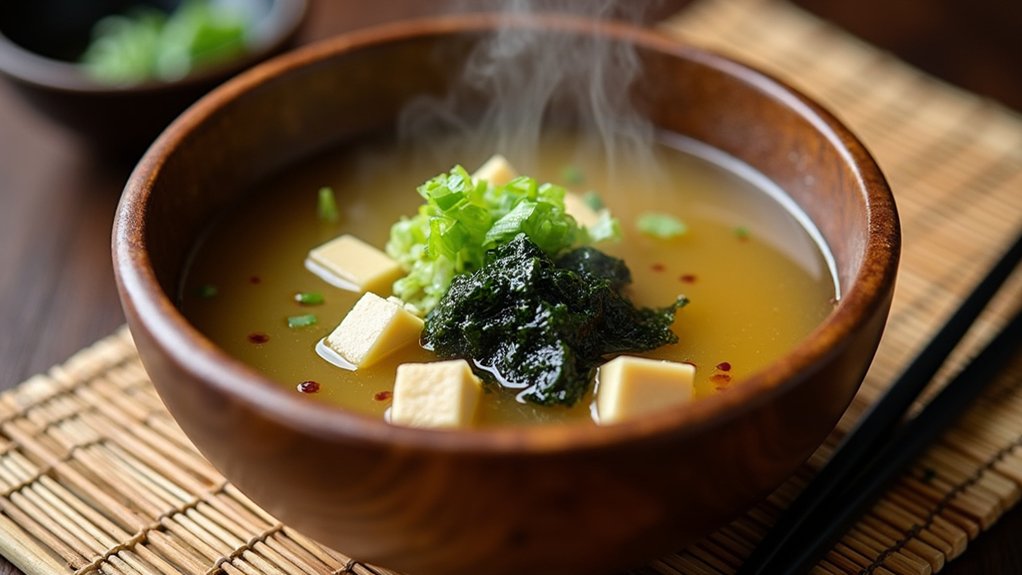
Miso soup is a traditional Japanese dish that embodies warmth and comfort, perfect for any time of the year. Its rich umami flavor comes from miso paste, which is made from fermented soybeans. This soup is not only delicious but also highly nutritious, often packed with various ingredients like tofu, seaweed, and green onions. Making miso soup at home is quite simple and allows you to customize it with your favorite ingredients, ensuring it’s fresh and tailored to your taste preferences.
Miso soup is a comforting Japanese classic, rich in umami and easily customizable to suit your tastes.
To prepare miso soup, you’ll need to start by creating a dashi broth, which serves as the base for the soup. Dashi is a simple stock made from kombu (dried kelp) and bonito flakes (dried fish flakes). Once the dashi is ready, you can add miso paste and other ingredients like tofu and seaweed to create a satisfying and wholesome dish. This soup can be enjoyed on its own or served alongside rice and other Japanese dishes for a complete meal.
Ingredients:
- 4 cups water
- 1 piece kombu (about 4 inches)
- 1 cup bonito flakes
- 3 tablespoons miso paste (white or red)
- 1 cup soft tofu, cubed
- 1/4 cup dried wakame seaweed
- 2 green onions, sliced
Instructions:
In a medium pot, bring 4 cups of water to a simmer and add the kombu. Let it simmer for about 5-10 minutes, then remove the kombu and add the bonito flakes. Allow the stock to simmer for another 5 minutes, then strain the liquid to remove the flakes, leaving you with a clear dashi broth. Return the dashi to the pot and reduce the heat to low. In a small bowl, mix the miso paste with a few spoonfuls of the warm dashi until smooth, then gradually stir this mixture back into the pot. Add in the cubed tofu and wakame seaweed, allowing the soup to warm through for a few minutes. Finally, garnish with sliced green onions before serving.
Extra Tips:
When making miso soup, it’s important not to boil the soup once the miso is added, as high heat can destroy the beneficial probiotics found in miso. Additionally, feel free to experiment with different ingredients like mushrooms, daikon radish, or even seasonal vegetables to personalize your soup. Miso paste comes in various types, so try both white and red miso to find your preferred flavor profile. Enjoy your homemade miso soup warm and fresh!
Cooking Steps
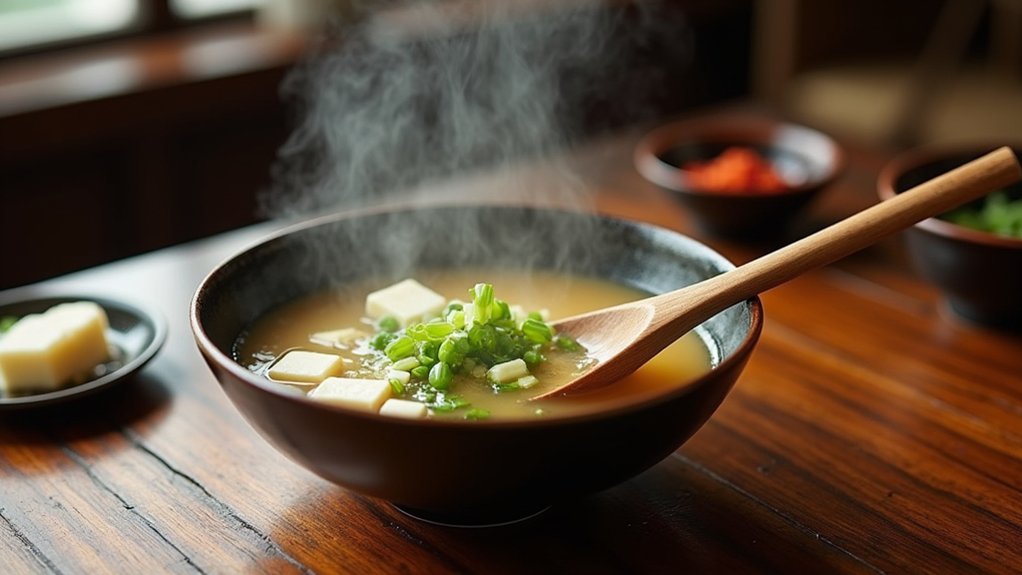
Now that we have all our ingredients ready, let’s get cooking! I’ll walk you through each step, starting with adding the dashi stock to the pot. Trust me, as we whisk in the miso paste, you’ll already start to feel the warmth and comfort of this delicious soup coming together.
Step 1. Gather All Ingredients

To whip up a delicious bowl of miso soup, gathering all the right ingredients is essential. I love playing with ingredient selection to create unique flavor variations that make each batch special. Here’s what you’ll need to get started:
- Miso paste – the heart of our soup, choose from white, yellow, or red for different tastes.
- Dashi stock – this umami-rich base brings depth; you can make it from scratch or use instant.
- Tofu – soft or firm, it adds protein and texture; feel free to experiment with types.
- Seaweed – wakame is traditional, but you can try other varieties for a twist.
Gathering these ingredients not only sets the stage for a fantastic meal but also sparks creativity in your kitchen!
Step 2. Add Dashi Stock to Pot

Once you’ve gathered all your ingredients, it’s time to bring that dashi stock to life. First, pour your prepared dashi into a pot over medium heat. If you’re feeling adventurous, consider exploring dashi variations—like kombu or shiitake-infused stocks—that can elevate the flavor profile of your miso soup. As the stock warms, take a moment to enjoy the rich aroma wafting through your kitchen; it’s a comforting reminder of home. Make certain to stir occasionally to guarantee even heating and prevent any sticking at the bottom. This stock preparation step is essential, as it forms the foundation for the delicious miso paste you’ll soon whisk in. Get ready; your miso soup adventure is just beginning!
Step 3. Whisk in Miso Paste
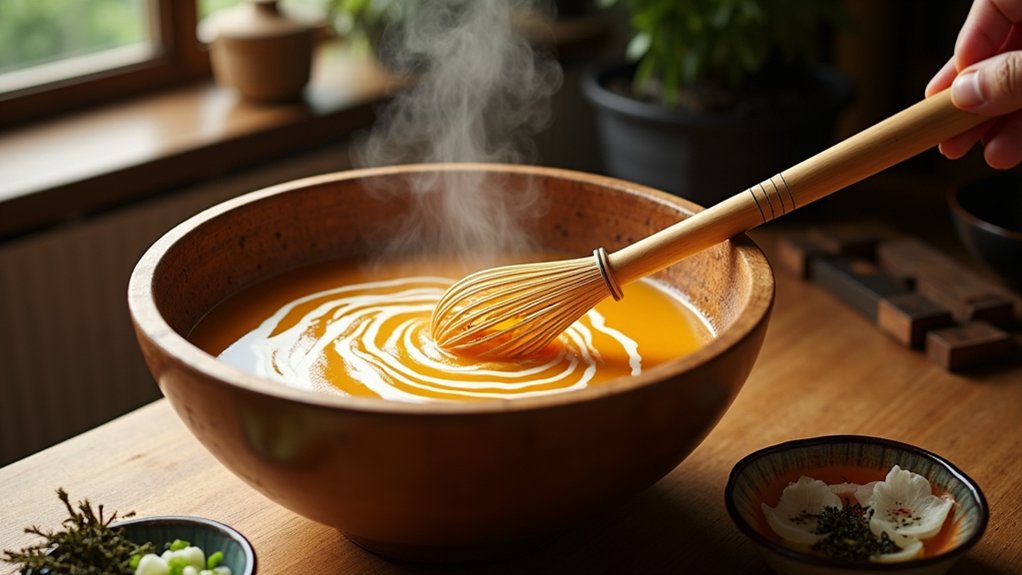
Gently whisk in the miso paste, letting it dissolve into the warm dashi stock. This step is essential, as the right miso varieties can elevate your soup to new heights. I love experimenting with different flavors, from the rich umami of red miso to the lighter notes of white miso. Using effective whisk techniques helps guarantee a smooth, luxurious texture. Here are some tips to make the most of this process:
- Choose your miso variety based on your taste preference.
- Use a small whisk or a fork for better control.
- Gradually add miso to avoid clumping.
- Taste and adjust—add more for depth!
Enjoy the magical transformation as your dashi turns into a comforting bowl of miso soup!
Step 4. Add Tofu and Seaweed
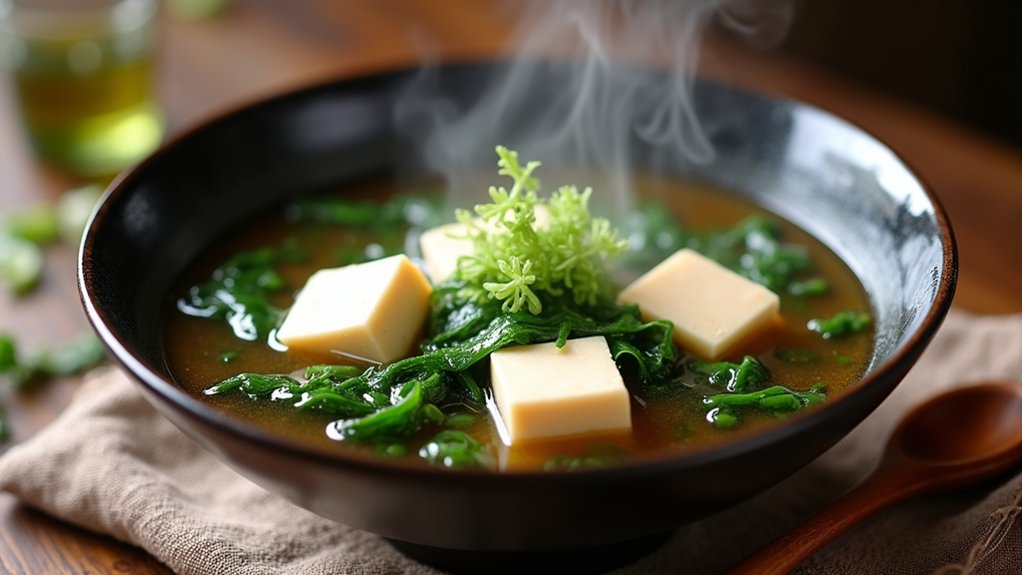
As you prepare to add tofu and seaweed, it’s exciting to think about how these ingredients will enhance the flavors of your miso soup. Tofu benefits your dish not just by adding a creamy texture but also by providing a protein boost, making your soup more filling. I like to use firm tofu, cutting it into bite-sized cubes for that perfect mouthfeel.
Now, let’s talk about seaweed varieties. Nori, wakame, or kombu can all add unique flavors and nutrients to your soup. I often choose wakame for its delicate taste and vibrant color. Just gently fold in your tofu and seaweed, letting them mingle with the miso base. This combination creates a comforting and nourishing bowl of soup that feels like home.
Step 5. Simmer for Five Minutes

Now that your tofu and seaweed are nestled in the fragrant miso broth, it’s time to let everything simmer together. This step is essential for flavor enhancement, as the magic happens during these five minutes. I love using a few simmering techniques to guarantee that all the ingredients meld beautifully.
- Keep an eye on the heat; you want a gentle bubble, not a rolling boil.
- Stir occasionally to prevent sticking and promote even flavor distribution.
- Taste the broth midway—you might want to adjust with a splash of soy sauce or a sprinkle of green onions.
- Enjoy the aromas wafting through your kitchen; it’s a sign that something delicious is brewing!
Let’s make this miso soup unforgettable!
Nutritional Guide
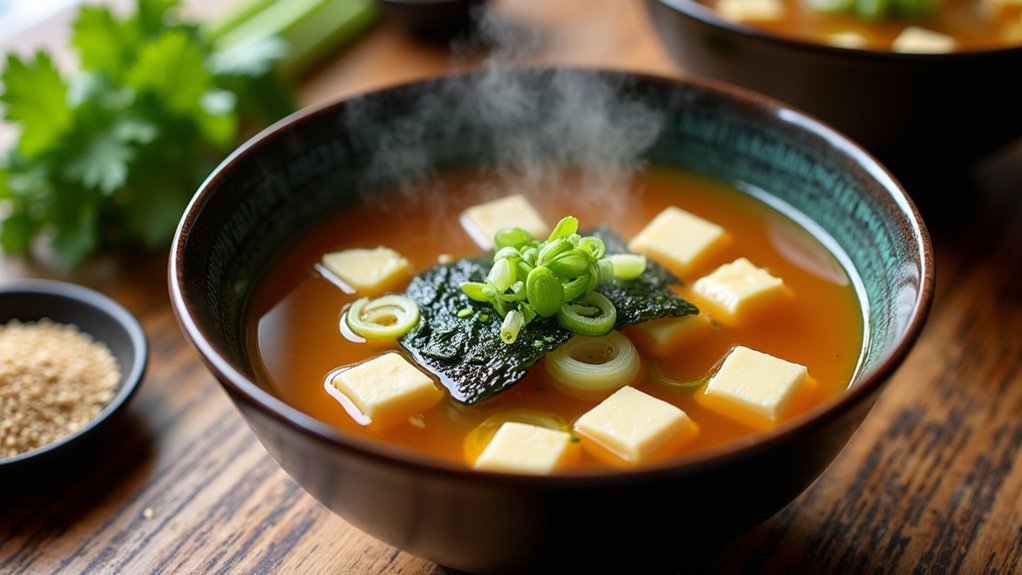
While you might think of miso soup as just a comforting bowl of warmth, it’s also packed with nutritional benefits that can support a healthy lifestyle. The ingredients in miso soup, like miso paste, tofu, and seaweed, offer a wealth of health benefits, such as boosting immunity and enhancing digestion. Here’s a quick ingredient analysis to show you what’s inside:
| Ingredient | Health Benefits | Nutritional Value (per serving) |
|---|---|---|
| Miso Paste | Probiotic, antioxidant | 56 calories, 3g protein |
| Tofu | High in protein | 70 calories, 8g protein |
| Seaweed | Rich in vitamins and fiber | 45 calories, 2g protein |
| Green Onions | Antioxidant-rich | 5 calories, 0.2g protein |
| Water | Hydration | 0 calories |
This delicious soup is a great way to nourish your body!
Final Thoughts
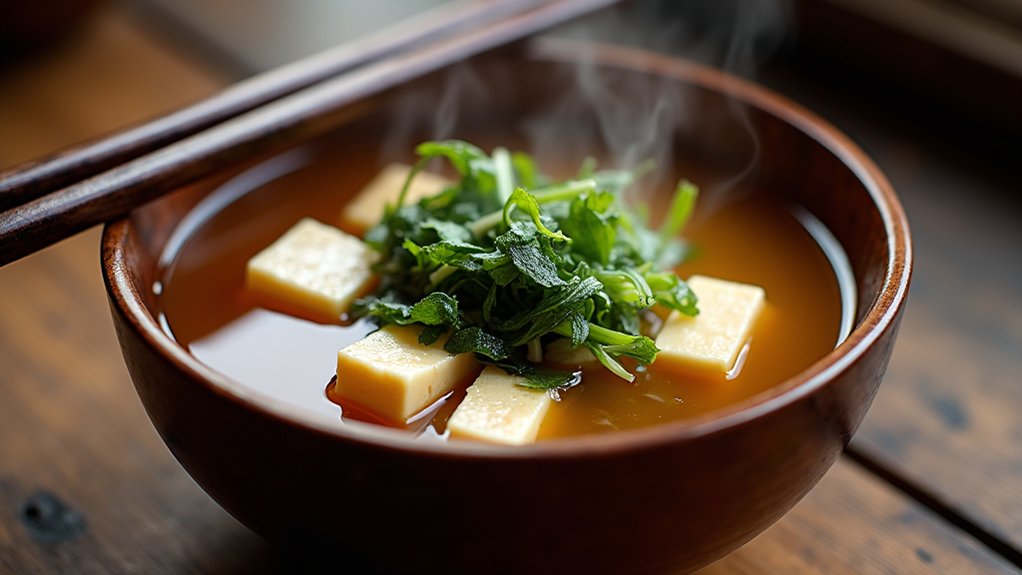
Miso soup isn’t just a tasty dish; it’s a wholesome experience that brings warmth and comfort to any meal. I love how versatile it is—there are endless soup variations to explore, each one offering unique flavors and textures. Plus, the health benefits, like boosting your immune system and aiding digestion, make it even more appealing.
Here are a few reasons to give it a try:
- You can customize it with your favorite ingredients.
- It’s quick and easy to whip up on a busy day.
- It’s a great way to introduce more plant-based meals into your diet.
- Sharing a bowl of miso soup can create memorable moments with loved ones.
Frequently Asked Questions
Can I Use Instant Miso Paste Instead of Traditional Miso?
Absolutely, I’ve used instant miso paste for its convenience and consistent flavor. While traditional miso offers depth, instant miso benefits include quicker preparation and less hassle, making it a great option for busy days.
How Long Does Miso Soup Last in the Fridge?
Miso soup lasts about three to five days in the fridge. Ever wondered how to maximize freshness? I’ve found that proper soup storage methods and miso preservation tips really make a difference in flavor longevity!
Is Miso Soup Gluten-Free?
Yes, miso soup can be gluten-free if you choose the right miso types. Some miso contains gluten sources like barley, so I always check labels and opt for rice miso for a safe, delicious option.
Can I Make Miso Soup Without Dashi?
Absolutely, you can make miso soup without dashi! I love experimenting with miso soup alternatives like vegetable broth. For flavor enhancements, I often add mushrooms or seaweed to create a delightful, rich taste.
What Are Some Common Variations of Miso Soup?
I love experimenting with miso soup! My favorite variations include adding silken tofu, wakame seaweed, fresh spinach, or mushrooms. Sometimes, I toss in shrimp or chicken for protein—each twist brings new flavors to the bowl!
Conclusion
To sum up, making miso soup is a delightful experience that connects us to a rich culinary tradition. Did you know that over 80% of Japanese households enjoy miso soup regularly? That’s a proof of its comfort and flavor! I hope this recipe inspires you to create your own bowl of warmth and share it with loved ones. Cooking together can spark joy and create lasting memories, so grab your ingredients and let’s get started on this delicious journey!