

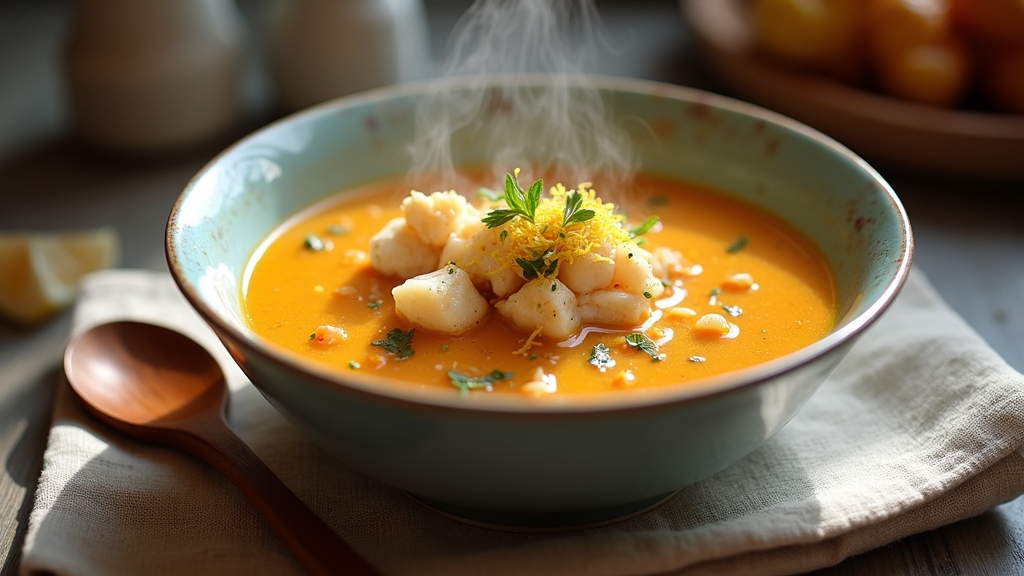
Crab soup is one of my favorite comfort foods, combining tender crab meat with a creamy, flavorful broth. It starts with sautéing onions and garlic, then adding fresh crab and your choice of broth. I love mixing in Old Bay seasoning for that classic taste. Let it simmer until the flavors meld, then finish it off with cream for richness. It’s perfect served hot with crusty bread. Stick around to learn more about ingredient variations and serving tips!
Contents
History
When I think about crab soup, I can’t help but feel a wave of nostalgia wash over me, recalling the cozy dinners spent around the table with family. This dish has a rich history, woven into the cultural fabric of coastal communities. Crab soup isn’t just about flavors; it tells stories of local traditions and the bounty of the sea. Each region has its own twist, whether it’s the spicy kick of a Cajun version or the creamy warmth of a New England classic. These regional variations not only showcase local ingredients but also highlight how food connects us. As I explore these variations, I’m reminded of the joy in sharing beloved recipes that carry the essence of home.
Recipe
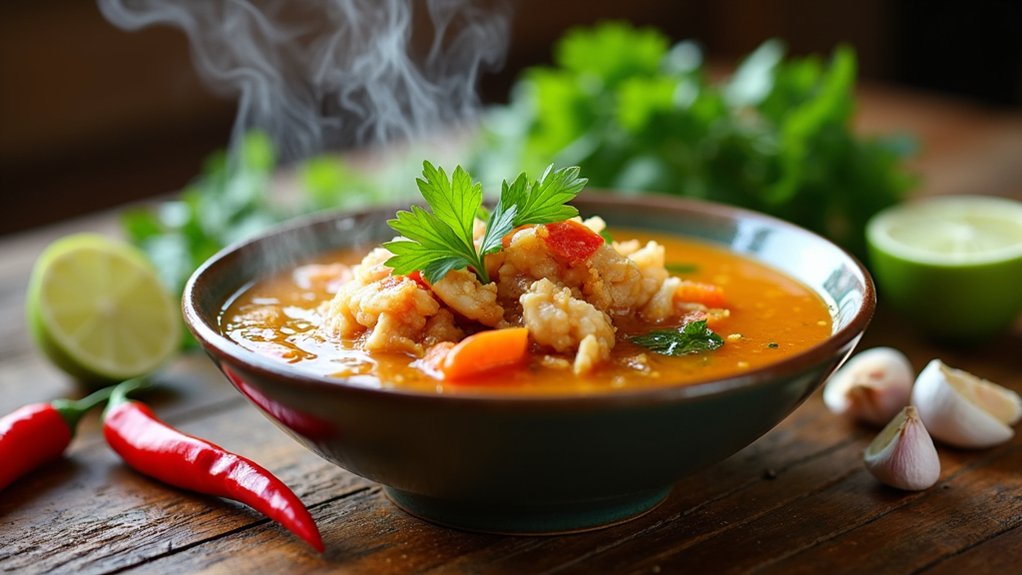
Crab soup is a delightful dish that brings the flavors of the ocean right to your table. This comforting soup is perfect for a cozy dinner or an elegant gathering, offering a rich, creamy base with tender pieces of crab meat that are sure to impress. Its blend of savory spices and fresh ingredients creates a harmonious balance that highlights the natural sweetness of the crab.
Preparing crab soup can be a rewarding experience, allowing you to customize it to your taste. Whether you prefer a classic creamy version or a lighter broth-based soup, this recipe will guide you through creating a delicious crab soup that will warm your heart and satisfy your cravings. Gather your ingredients, and let’s get started on this culinary adventure!
Preparing crab soup is a delightful journey, offering the chance to tailor it to your tastes, whether creamy or broth-based.
Ingredients:
- 1 lb fresh crab meat (or 2 cups canned crab meat)
- 4 cups seafood stock or chicken broth
- 1 cup heavy cream
- 1 medium onion, finely chopped
- 2 cloves garlic, minced
- 2 stalks celery, diced
- 1 medium carrot, diced
- 1 tsp Old Bay seasoning
- 1 tsp Worcestershire sauce
- 2 tbsp butter
- Salt and pepper to taste
- Fresh parsley, chopped (for garnish)
In a large pot, melt the butter over medium heat and sauté the onion, garlic, celery, and carrot until they are softened, about 5-7 minutes. Add the seafood stock and bring it to a simmer. Stir in the Old Bay seasoning, Worcestershire sauce, and season with salt and pepper. Let the mixture simmer for about 10 minutes to allow the flavors to meld. Next, reduce the heat to low and slowly stir in the heavy cream, followed by the crab meat. Allow the soup to warm through for an additional 5 minutes, being careful not to boil. Serve hot, garnished with fresh parsley.
For the best results, choose high-quality crab meat to enhance the flavor of your soup. If you prefer a thicker consistency, you can blend a portion of the soup and then mix it back in. Feel free to experiment with additional seasonings or vegetables, such as corn or bell peppers, to personalize your dish further. Always taste as you go to adjust the seasoning to your liking, and enjoy the wonderful aromas as your crab soup simmers away!
Cooking Steps
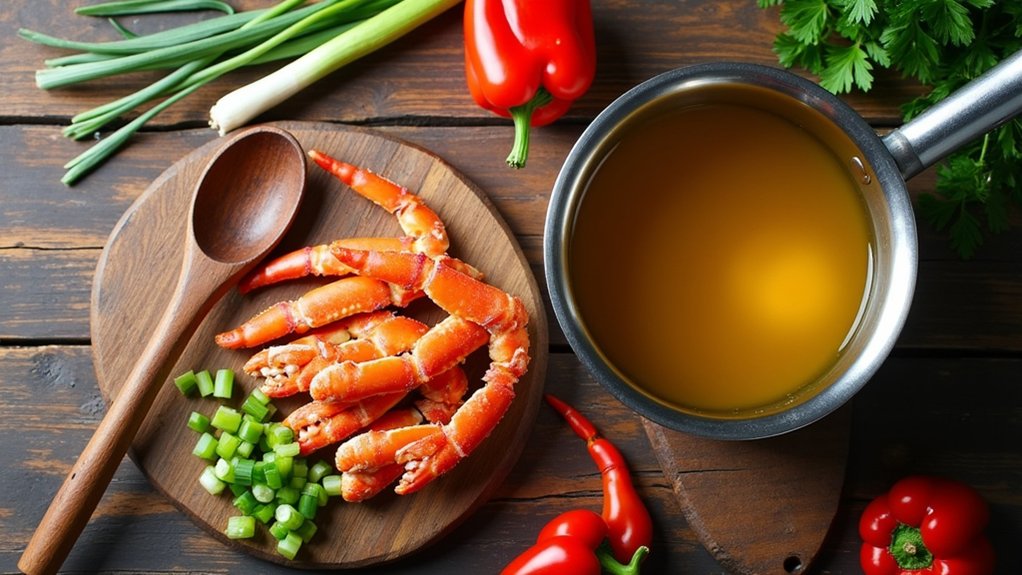
Now that we have our ingredients ready, it’s time to get cooking! I love starting by sautéing the onions and garlic, which fills the kitchen with an amazing aroma. Once that’s done, we’ll add the crab meat and a few other ingredients to create a rich, flavorful soup.
Step 1. Sauté Onions and Garlic
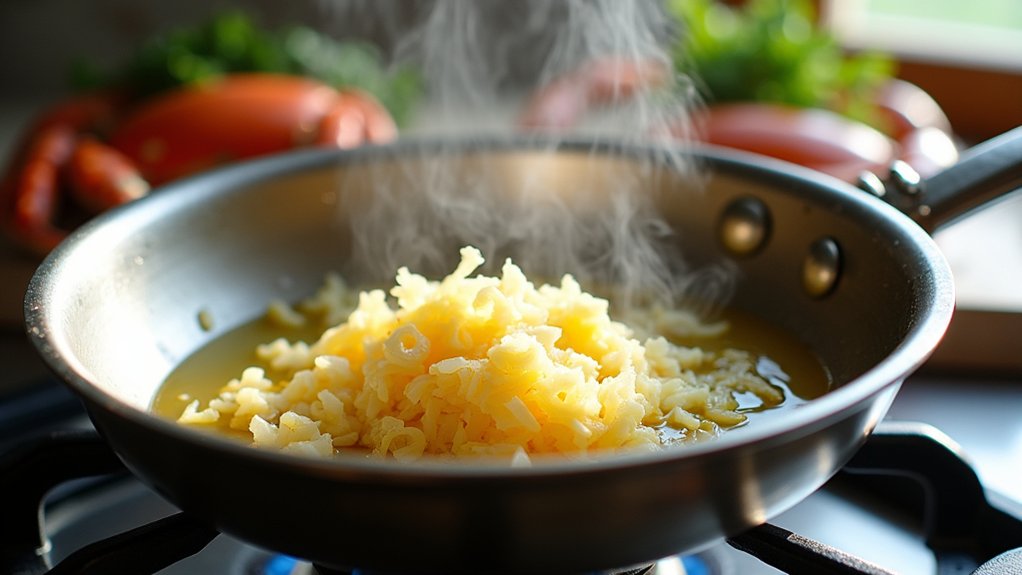
As I begin this delicious journey into making crab soup, I find that sautéing onions and garlic is one of the most aromatic steps that sets the stage for all those wonderful flavors to come. Using effective sauté techniques, I heat a splash of olive oil in my pot, allowing it to shimmer before adding finely chopped onions. The moment those onions hit the pan, their sweetness fills the air. I follow that with minced garlic, stirring until it’s golden and fragrant, which is key for flavor enhancement. This process not only softens the onions but also creates a beautiful base for my soup. Once it’s all nicely sautéed, I can’t help but feel excited about what’s next in this culinary adventure!
Step 2. Add Crab Meat
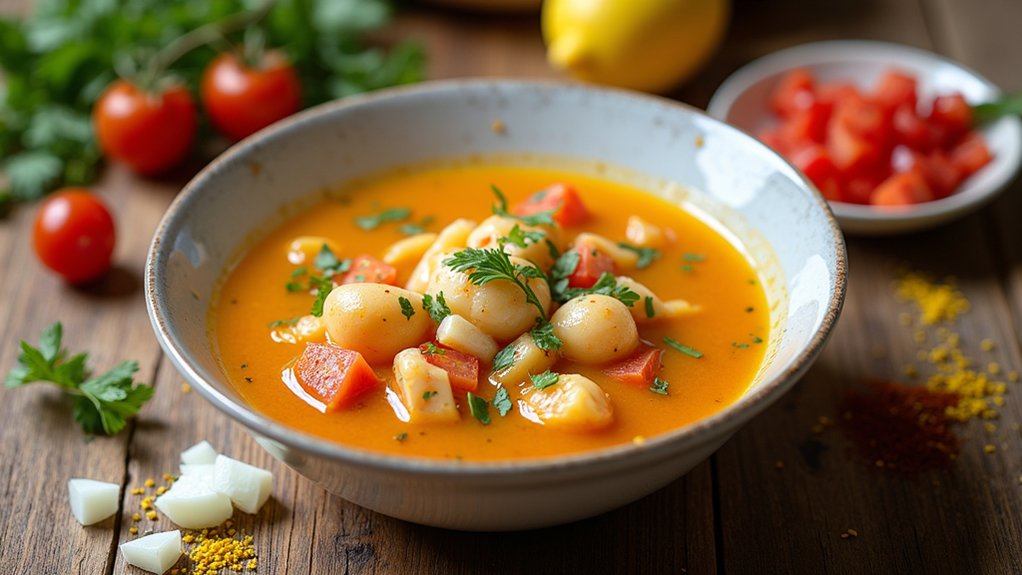
With the sautéed onions and garlic creating a delightful aroma, it’s time to gently fold in the crab meat. I love using a mix of crab varieties—like sweet lump crab and tender backfin—for a rich texture and flavor. Make sure your meat preparation is spot on; you want it to be fresh and perfectly flaked. As I add the crab, I carefully incorporate it into the mixture, ensuring not to break up the delicate pieces too much. This step is essential because it allows the crab to blend harmoniously with the sautéed ingredients, enhancing the overall taste. The anticipation builds as I imagine how delicious this soup will be once it’s fully crafted. Let’s keep going!
Step 3. Add Broth and Seasonings
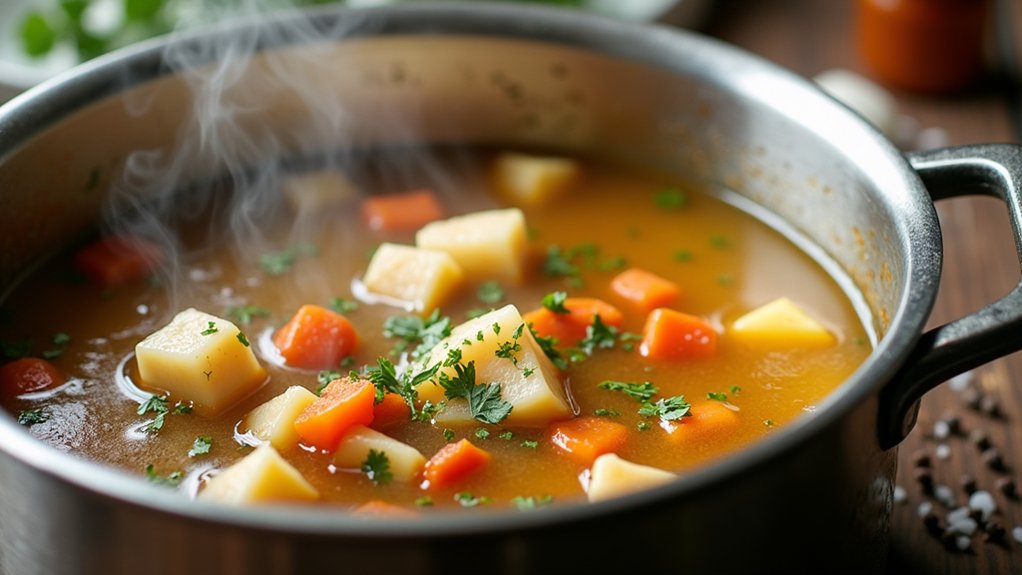
After folding in the crab meat, the next step is adding the broth and seasonings, which will really bring the soup to life. I love experimenting with different broth types—chicken, vegetable, or seafood broth can all elevate the flavor profile. Pour in about four cups of your chosen broth, ensuring it complements the sweetness of the crab. Then, it’s time to get creative with seasoning options! A sprinkle of Old Bay seasoning adds that classic touch, while a dash of cayenne pepper introduces a delightful kick. Don’t forget fresh herbs like dill or thyme for that aromatic finish. Stir everything together, and let the magic happen as those flavors intermingle, creating a comforting bowl of deliciousness.
Step 4. Simmer for 20 Minutes
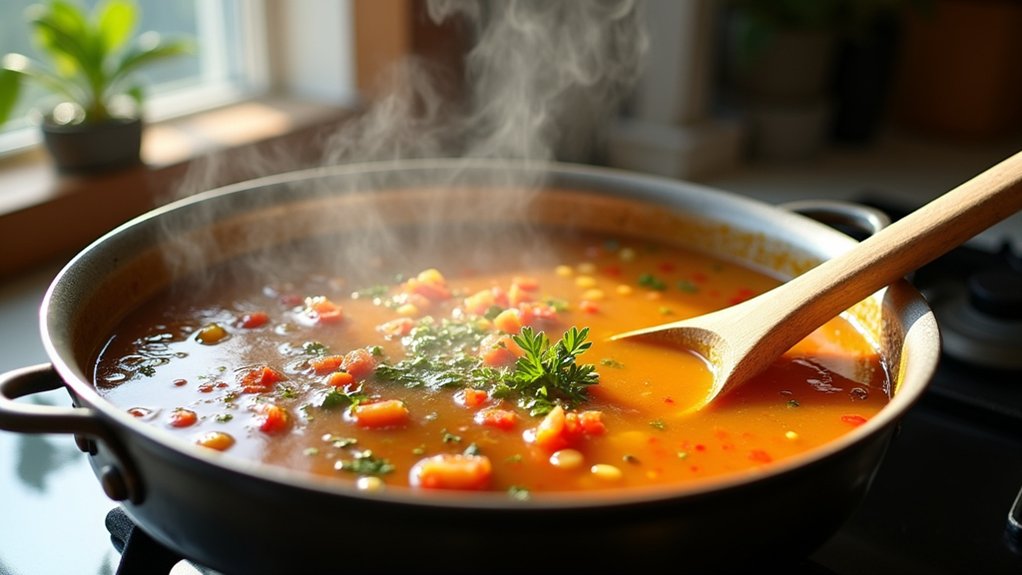
Let’s get that soup bubbling! Now it’s time to put our delicious mixture on the stove and let those flavors meld together. I like to use gentle simmering techniques at this stage; it’s all about coaxing out the best flavors without boiling away the goodness. As the soup simmers for 20 minutes, you’ll notice the aroma filling your kitchen—trust me, it’s heavenly! This step not only enhances the flavors but also allows the broth to deepen, creating a rich base that’ll make your taste buds dance. Make sure to occasionally stir, just to keep everything happy and well-mixed. You’ll be amazed at how a little time can transform our ingredients into something extraordinary. Enjoy this process; it’s where the magic happens!
Step 5. Blend in Cream
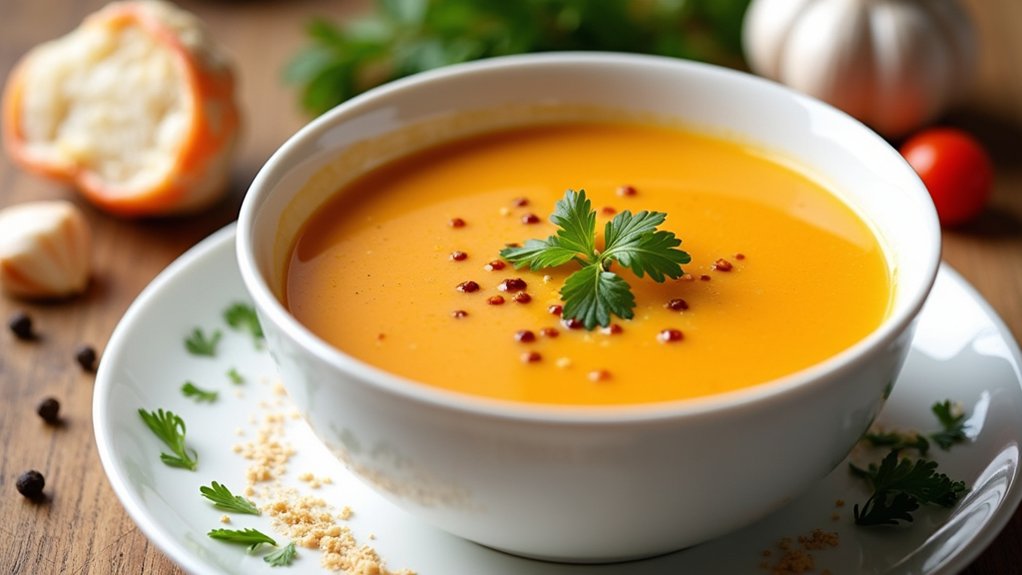
Now, it’s time to bring a luxurious touch to our crab soup by blending in some cream. This step elevates the dish, giving it that rich, velvety finish we crave. Here are some cream varieties and blending techniques to contemplate:
- Heavy Cream: For a thick, indulgent texture that coats your spoon perfectly.
- Half-and-Half: Adds creaminess without overwhelming the flavors, perfect for a lighter option.
- Coconut Cream: An innovative twist for those seeking a dairy-free alternative with a hint of tropical flair.
- Blending Techniques: Use an immersion blender for a smooth consistency, or whisk by hand for a rustic feel.
Incorporating cream not only enhances the flavor but also creates a comforting bowl of crab soup that’s hard to resist.
Nutritional Guide
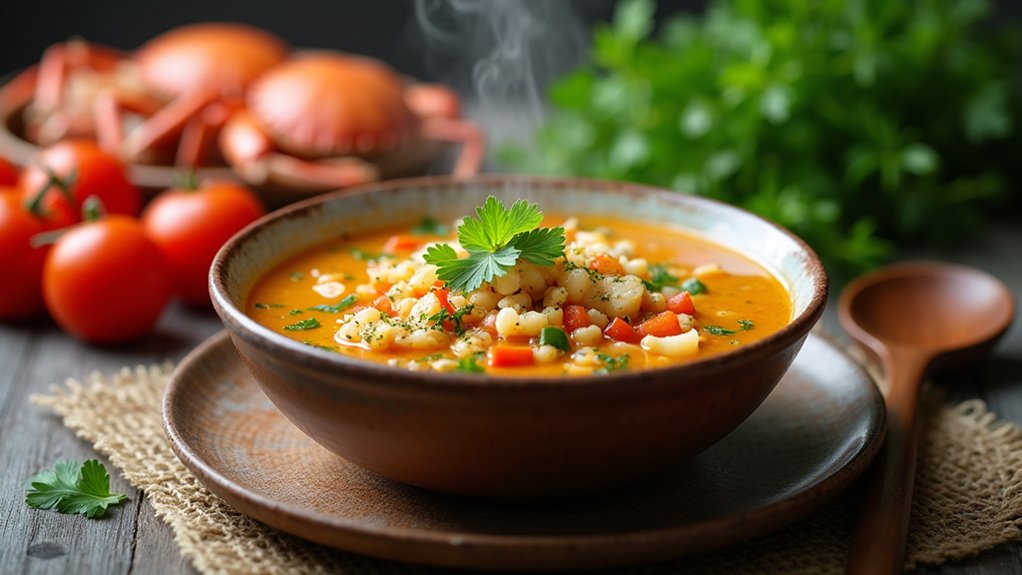
When you plunge into making crab soup, it’s not just about flavors; it’s also about the nutrition packed into every bowl. This dish offers a delightful mix of taste and health benefits, making it a clever choice for any meal.
Here’s a quick nutritional breakdown of crab soup to inspire you:
| Nutrient | Amount per Serving | Health Benefits |
|---|---|---|
| Calories | 250 | Provides energy |
| Protein | 20g | Supports muscle growth and repair |
| Omega-3 Fatty Acids | 1.5g | Promotes heart health |
| Vitamin B12 | 3.5µg | Boosts nerve function |
| Selenium | 30µg | Acts as an antioxidant |
Final Thoughts
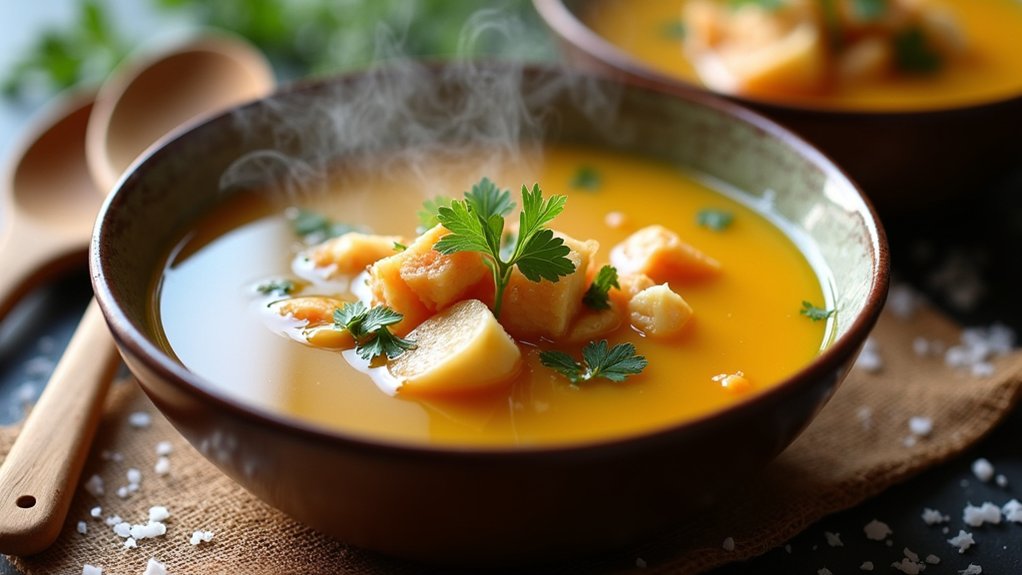
Crab soup isn’t just a delicious meal; it’s a way to bring warmth and comfort to your kitchen and dining table. I love experimenting with soup variations, combining flavors to create something truly unique. Here are a few ideas to elevate your crab soup experience:
- Add spices: Try a dash of Old Bay or cayenne for a kick.
- Explore seafood pairings: Lobster or shrimp can add depth to your dish.
- Incorporate veggies: Fresh corn or spinach can enhance the texture and taste.
- Garnish creatively: A sprinkle of fresh herbs or a swirl of cream can make it stunning.
Frequently Asked Questions
Can I Use Frozen Crab Meat for This Recipe?
Absolutely, I use frozen crab all the time! While fresh crab has its charm, frozen crab can still deliver great flavor and texture. Just make sure to thaw it properly before cooking for the best results!
What Type of Crab Is Best for Soup?
I’ve found that blue crab, with its sweet, tender meat, often shines in soups. Curiously, Dungeness crab contains 20% more meat than blue crab, making it a luxurious option for an innovative twist on traditional recipes.
How Can I Store Leftover Crab Soup?
I store leftover crab soup in airtight containers. For freezing tips, let it cool before sealing. When reheating, I gently warm it on the stove, adding a splash of broth to revive the flavors.
Is Crab Soup Gluten-Free?
Yes, crab soup can be gluten-free! I always check the crab soup ingredients carefully. Using gluten-free alternatives like rice flour or cornstarch can create a deliciously innovative dish—after all, necessity is the mother of invention!
Can I Substitute Crab With Another Seafood?
I often use shrimp as a fantastic alternative or even a lobster option for a unique twist. Both bring a delightful taste and texture that can elevate your dish to new culinary heights.
Conclusion
As you savor your homemade crab soup, I hope you feel a touch of the ocean’s magic, reminiscent of warm family gatherings and shared laughter. This recipe isn’t just about ingredients; it’s about creating memories and connecting with loved ones. So, gather your friends or family, ladle out the soup, and enjoy every spoonful together. After all, just like a well-told tale, the best recipes bring us back to the heart of what matters most. Happy cooking!