

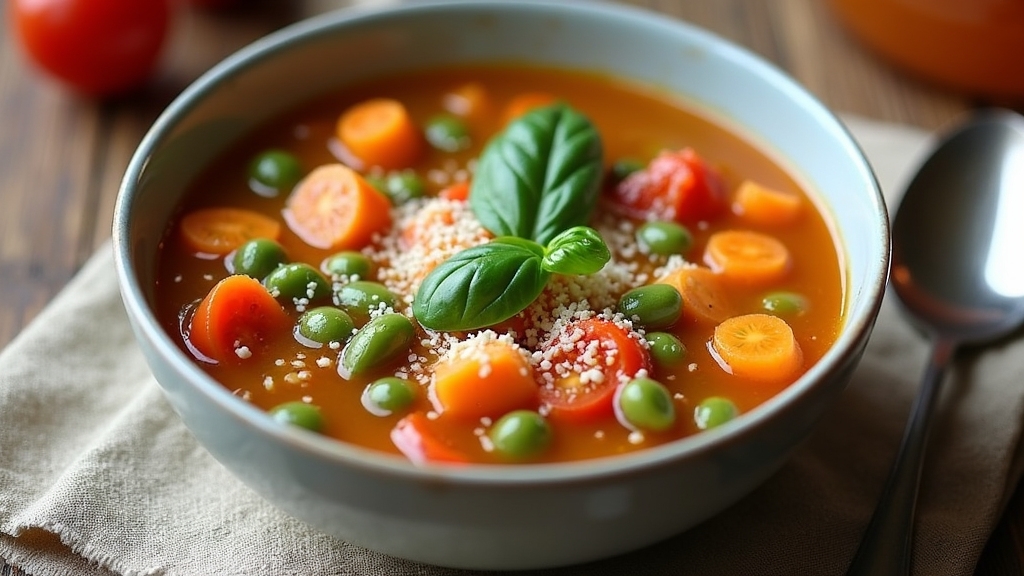
Looking for a comforting Italian minestrone soup recipe? I’ve got you covered! Start by chopping fresh veggies like onion, carrots, and zucchini. Then, sauté them in olive oil, add broth, canned tomatoes, and seasonings. Let it simmer until everything’s tender, then stir in some beans and pasta for heartiness. Don’t forget to toss in greens and herbs at the end for a burst of freshness. Trust me, it’s a dish that warms both the stomach and the soul! You’ll find more tips to make it even better.
Contents
History
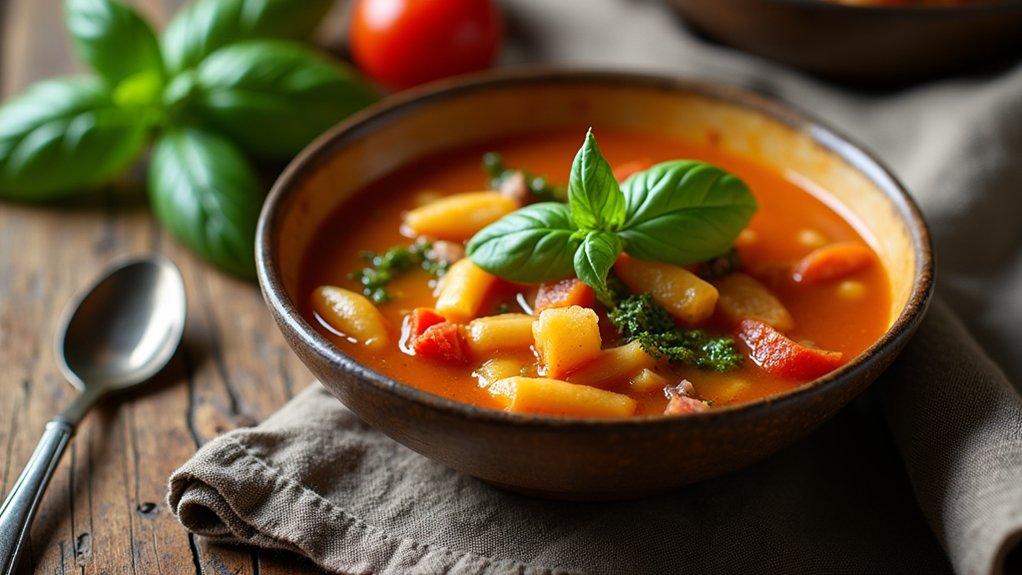
When I think about the history of minestrone soup, I can’t help but feel a sense of warmth and tradition. Its Italian origins trace back to peasant cooking, where frugality met creativity in kitchens across the country. This hearty dish isn’t just one recipe; it’s a canvas for regional variations. In Tuscany, you might find rich beans and kale, while Liguria adds fragrant basil and pesto. Each spoonful tells a story of local ingredients and family gatherings. As I explore these unique twists, I get excited about how minestrone evolves, blending old-world flavors with modern innovations. It’s a dish that invites us to experiment, making it a perfect companion for anyone looking to share a taste of history and warmth.
Recipe
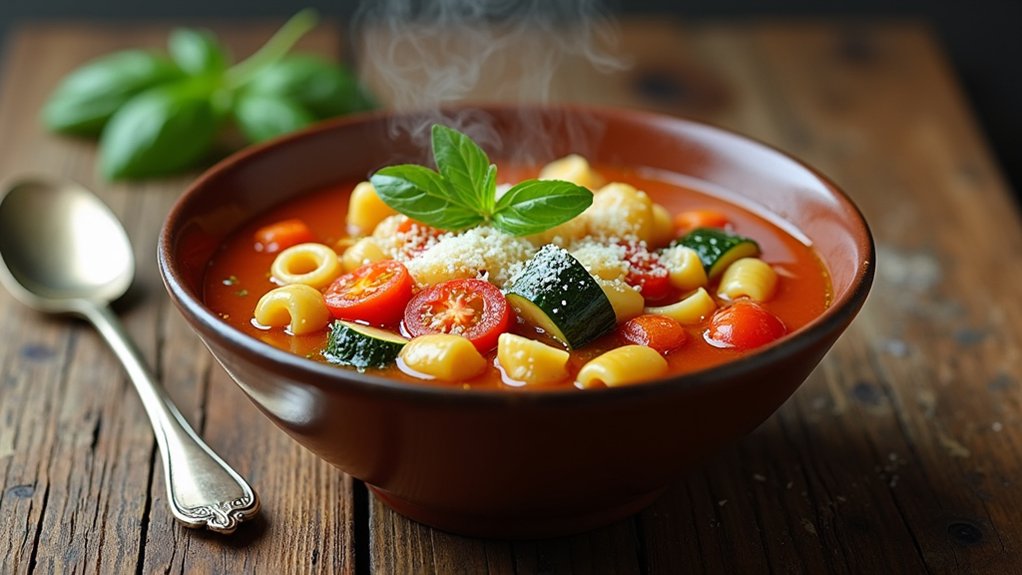
Ministroni soup is a hearty Italian dish that brings warmth and comfort to any table. Rich in flavors, this soup is packed with a variety of vegetables, beans, and pasta, making it a nutritious option for lunch or dinner. The beauty of minestrone lies in its versatility; you can tailor it to suit the ingredients you have on hand or the season, allowing for endless variations. It’s a perfect dish for using up leftover vegetables in your fridge, ensuring nothing goes to waste.
To make a delicious pot of minestrone soup, you’ll need to take your time to let the flavors meld together. Start by sautéing your aromatics, such as onions and garlic, to build a flavorful base. Then, add in your fresh vegetables, beans, and broth, letting everything simmer until tender. A sprinkle of fresh herbs at the end will elevate the soup and bring a burst of freshness. Whether served with crusty bread or a light salad, minestrone soup is sure to be a crowd-pleaser.
Ingredients:
- 2 tablespoons olive oil
- 1 onion, chopped
- 2 cloves garlic, minced
- 2 carrots, diced
- 2 celery stalks, diced
- 1 zucchini, diced
- 1 cup green beans, chopped
- 1 can (14 oz) diced tomatoes
- 6 cups vegetable or chicken broth
- 1 can (15 oz) kidney beans, drained and rinsed
- 1 cup small pasta (such as ditalini or elbow)
- Salt and pepper, to taste
- 1 teaspoon dried oregano
- 1 teaspoon dried basil
- Fresh parsley, chopped (for garnish)
- Grated Parmesan cheese (optional)
To cook the minestrone soup, heat the olive oil in a large pot over medium heat. Add the chopped onion and sauté until translucent, about 5 minutes. Stir in the minced garlic and cook for an additional minute. Next, add the diced carrots, celery, zucchini, and green beans, cooking for about 5-7 minutes until slightly softened. Incorporate the diced tomatoes, broth, and beans, and bring the mixture to a boil. Once boiling, add the pasta and reduce the heat to a simmer. Cook for another 10-15 minutes, or until the pasta is al dente. Season with salt, pepper, oregano, and basil. Serve hot, garnished with fresh parsley and Parmesan cheese if desired.
When cooking minestrone soup, feel free to get creative with your ingredient choices. You can include seasonal vegetables like spinach or kale, or swap out the pasta for quinoa or barley for a gluten-free option. Additionally, if you prefer a thicker soup, you can blend a portion of it to create a creamy texture. Remember to taste and adjust the seasoning as needed, and let the soup sit for a while before serving to allow the flavors to deepen. Enjoy your homemade minestrone!
Cooking Steps
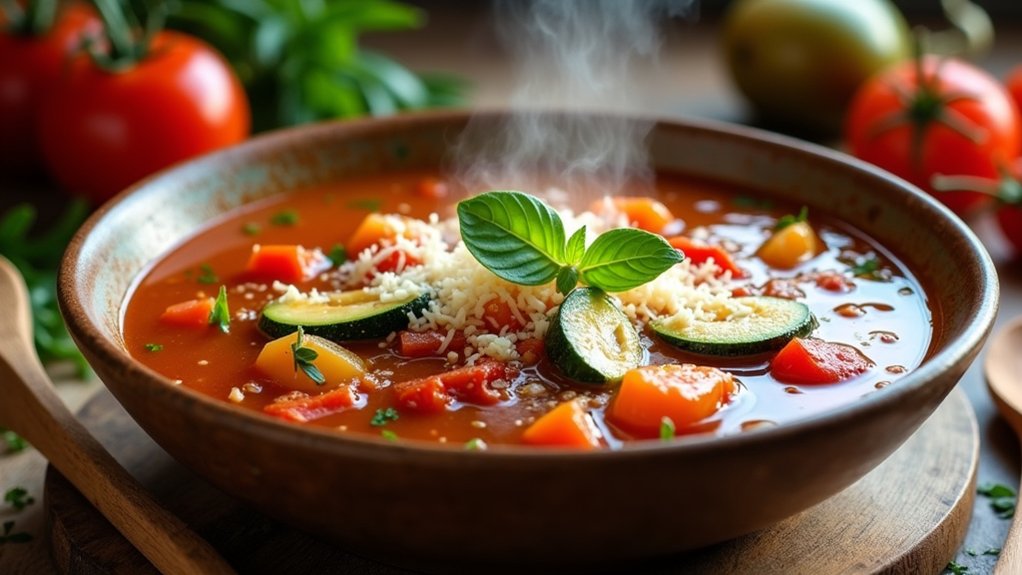
Now that we have our ingredients ready, let’s jump into the cooking steps for our delicious Ministroni soup. I’ll guide you through chopping those fresh vegetables finely, adding broth and seasonings, and simmering everything until the veggies soften just right. Once that’s done, we’ll stir in the pasta and beans, then finish it off with some vibrant greens and herbs to make it truly special!
Step 1. Chop Fresh Vegetables Finely
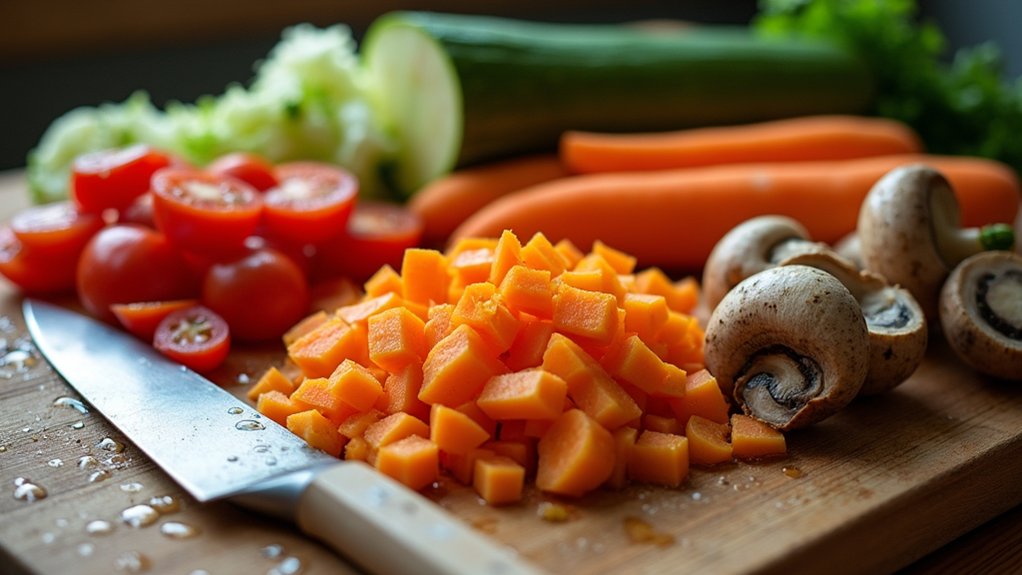
Chopping fresh vegetables finely is an essential step that brings a burst of flavor and texture to your soup. I love using a variety of veggies like carrots, zucchini, and bell peppers, as their freshness truly elevates the dish. When I chop, I focus on my technique—using a sharp knife and a sturdy cutting board to guarantee precision. I often start with a rough chop, then refine it with a rocking motion, creating uniform pieces that cook evenly. This not only enhances the visual appeal but also allows those vibrant flavors to meld beautifully. Remember, the fresher the vegetables, the better the soup, so choose the best quality you can find. Trust me, it makes all the difference!
Step 2. Add Broth and Seasonings
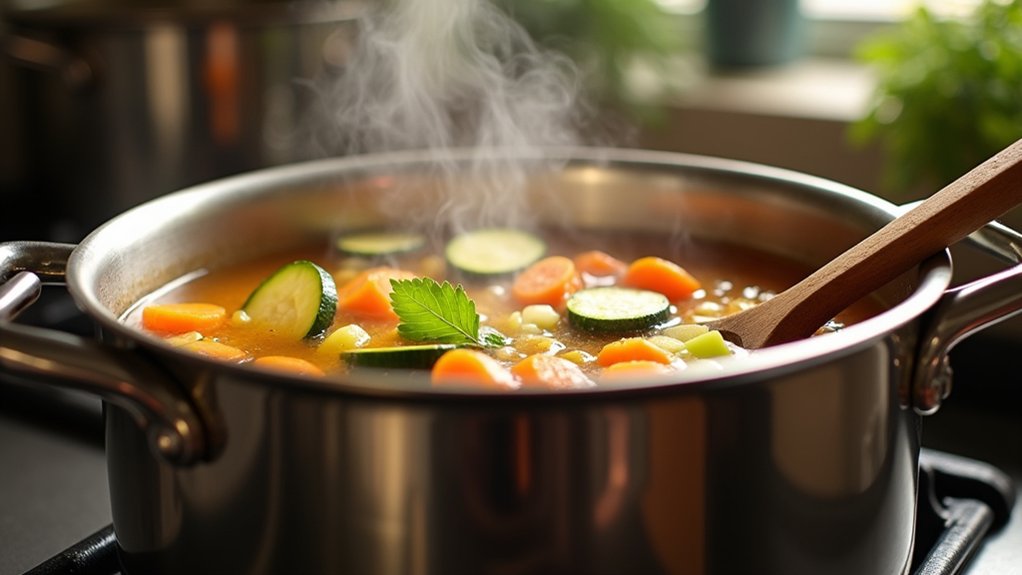
Once you’ve got your beautifully chopped vegetables ready, it’s time to bring your soup to life by adding broth and seasonings. I love experimenting with different broth types—chicken, vegetable, or even a rich beef broth can elevate the flavors considerably. Pour in about six cups of your chosen broth, and let it mingle with those colorful veggies. Next, it’s essential to enhance the taste with your favorite seasoning blends. I often reach for Italian herbs like basil, oregano, and thyme, but don’t hesitate to mix it up! A pinch of crushed red pepper can add a delightful kick. Stir everything together, and feel the excitement build as the aroma fills your kitchen. Your soup’s about to shine!
Step 3. Simmer Until Vegetables Soften
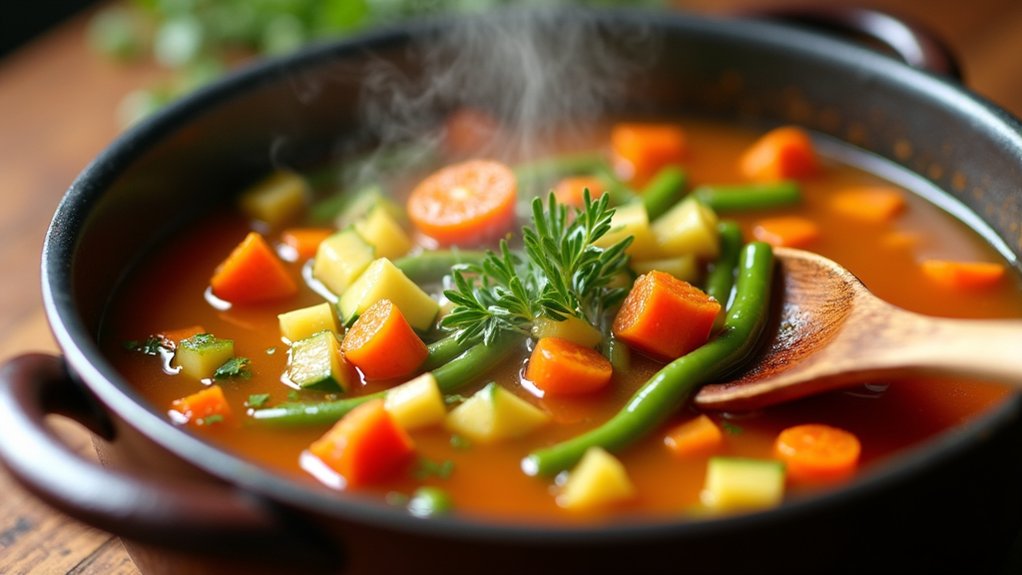
With the broth and seasonings mingling beautifully, it’s time to let the magic happen. I turn the heat down to a gentle simmer and set my timer for about 20 to 30 minutes. During this simmer time, the flavors deepen, and the vegetables begin to soften just right. I love peeking in occasionally, checking on the vegetable texture, which should be tender but not mushy—a perfect balance. This stage is essential because it allows the vegetables to absorb all those delicious flavors we’ve built up so far. As I stir, I can already imagine the vibrant colors and hearty aroma filling my kitchen, making it hard to resist diving right in.
Step 4. Stir in Pasta and Beans
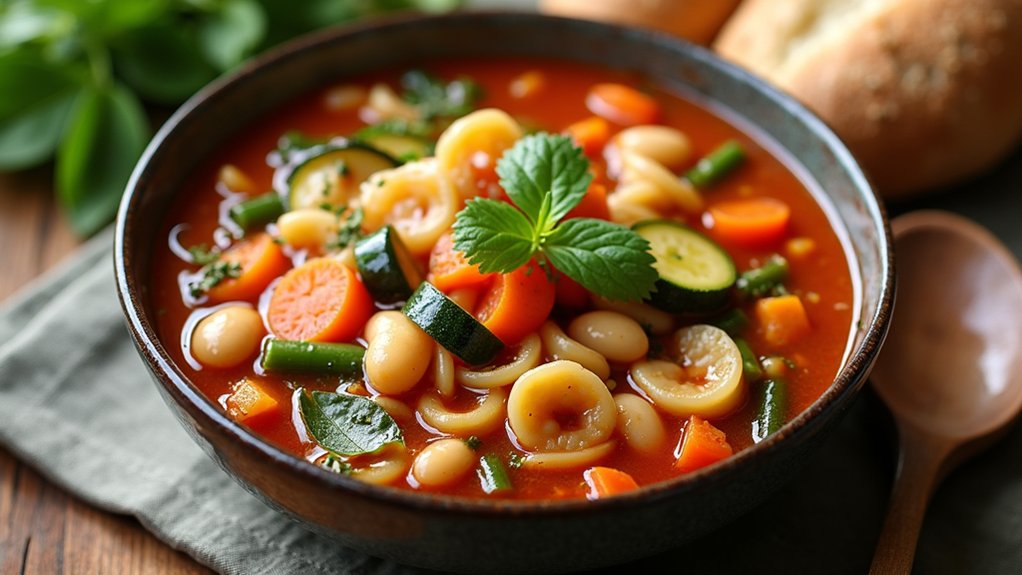
As the vegetables soften and the aroma fills the air, I can’t help but feel excited about the next step—stirring in the pasta and beans. I usually go for small pasta shapes like elbow macaroni or ditalini, as they fit perfectly in each spoonful. If you’re looking for a gluten-free option, you can substitute with quinoa or rice, which adds a unique twist. Next, I toss in canned beans, like cannellini or chickpeas, which not only boost protein but also create a heartier soup. A cooking tip? Don’t overcook the pasta; it should be al dente, soaking up the flavors without becoming mushy. This step truly transforms the broth into a comforting bowl of goodness, ready for sharing!
Step 5. Add Greens and Herbs
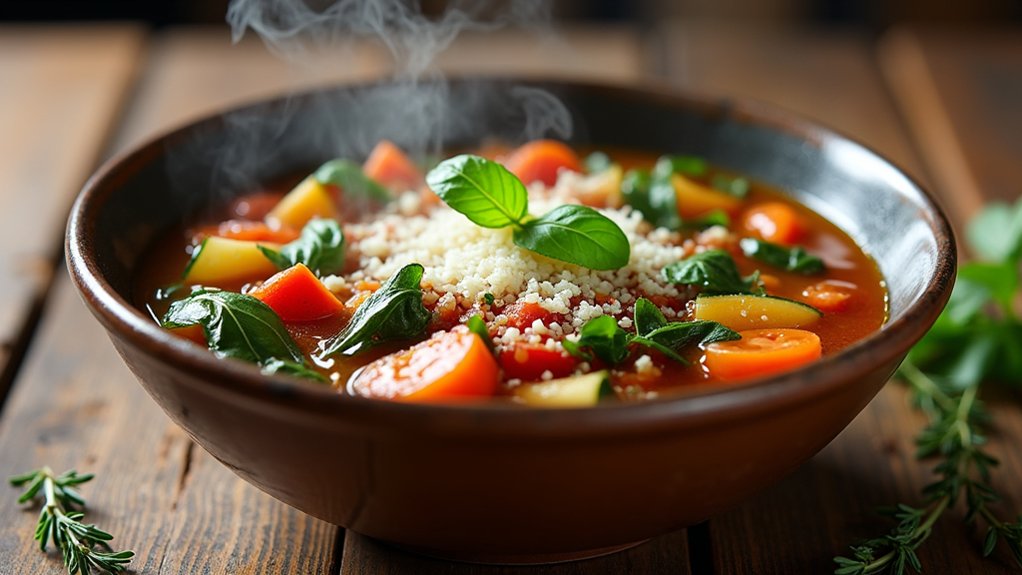
Adding greens and herbs to my soup is one of my favorite parts, because it not only brightens the dish but also brings a fresh burst of flavor. When I’m ready, I toss in a generous handful of fresh spinach, letting it wilt gently into the warm broth. The vibrant green color always makes me smile! Next, I chop up some fresh basil, which adds an aromatic punch that elevates the entire soup. Its sweet, peppery notes create a delightful contrast with the hearty ingredients. As I stir everything together, I can already imagine the joy of sharing this bowl of warmth with loved ones. Trust me, the combination of spinach and basil is simply irresistible!
Nutritional Guide
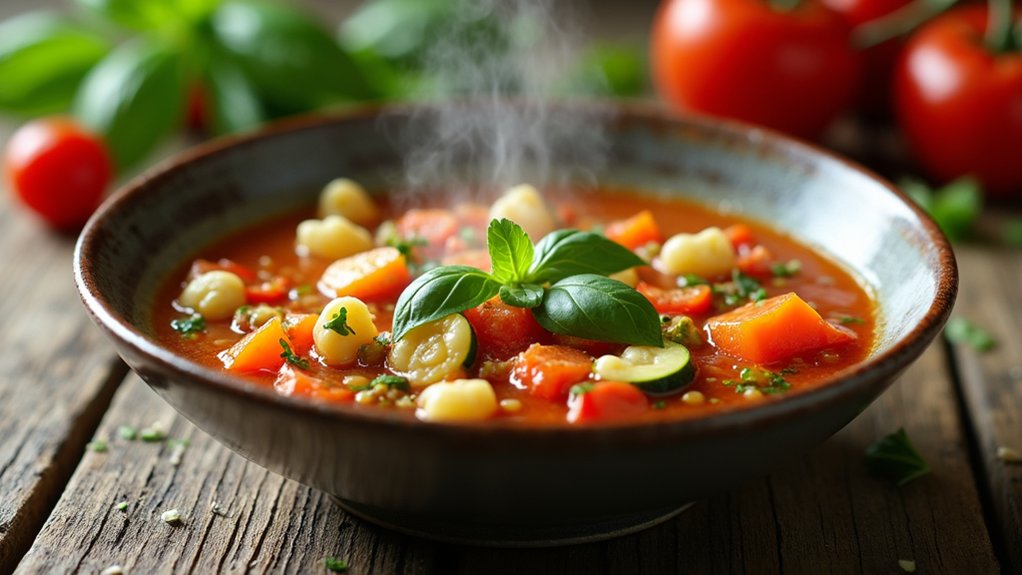
When it comes to enjoying a warm bowl of Minestrone soup, it’s not just about the delicious flavors; it’s also about the nutrients packed into every serving. This soup is a powerhouse of vitamins, minerals, and fiber, making it an excellent choice for health-conscious eaters. Here’s a quick nutritional guide to help you appreciate its benefits while considering your dietary needs.
| Nutritional Benefits | Dietary Considerations | Serving Size (1 cup) |
|---|---|---|
| High in Fiber | Gluten-Free Options | 150 calories |
| Rich in Vitamins | Vegan-Friendly | 7g protein |
| Low in Fat | Customizable | 30g carbs |
Final Thoughts
Cooking Minestrone soup isn’t just a way to fill your belly; it’s also a delightful journey that connects us to the warmth of home and the joy of sharing meals with loved ones. As you explore this recipe, remember that it’s all about creativity and personal touch. Here are some cooking tips to elevate your minestrone experience:
Cooking Minestrone soup is a heartwarming journey, celebrating creativity and the joy of sharing meals with loved ones.
- Experiment with ingredient variations; try adding seasonal vegetables or different beans.
- Don’t hesitate to mix up herbs and spices for a unique flavor profile.
- Consider using homemade broth for an extra layer of richness.
I hope this soup becomes a staple in your kitchen, bringing comfort and joy to every spoonful. Enjoy creating and sharing your own minestrone masterpiece!
Frequently Asked Questions
Can I Freeze Leftovers of Minestroni Soup?
Absolutely, I freeze leftovers all the time! For best results, cool the soup first, then store it in airtight containers. These freezing tips keep it fresh and flavorful for your next meal. Enjoy!
What Wine Pairs Well With Minestroni Soup?
I love pairing a crisp Pinot Grigio with minestroni soup. Its bright acidity complements the dish’s flavors beautifully. For something innovative, try a light Chianti; its berry notes enhance the soup’s diverse flavor profiles.
Is Minestroni Soup Gluten-Free?
Minestroni soup can be gluten-free! I love using gluten-free ingredients like quinoa or rice instead of pasta. With creative dietary substitutions, you can enjoy a delicious, hearty bowl without compromising on flavor or texture.
How Long Does Minestroni Soup Last in the Fridge?
Minestroni soup storage’s like a treasure chest; it lasts about three to four days in the fridge. For ideal soup shelf life, seal it tightly and enjoy those delightful flavors while they’re fresh!
Can I Make Minestroni Soup in a Slow Cooker?
Absolutely, I love making minestroni in a slow cooker! The slow cooker benefits allow flavors to meld beautifully, and I can experiment with minestroni variations, adding seasonal veggies to keep it fresh and exciting.
Conclusion
As I wrap up this journey into the world of minestrone soup, I can’t help but feel that cooking is like a warm hug for the soul. Whether you’re serving it on a chilly evening or sharing it with loved ones, this hearty dish brings comfort and joy. So, roll up your sleeves, embrace the flavors, and let the aroma fill your kitchen; after all, every bowl tells a story worth savoring. Enjoy your cooking adventure!